
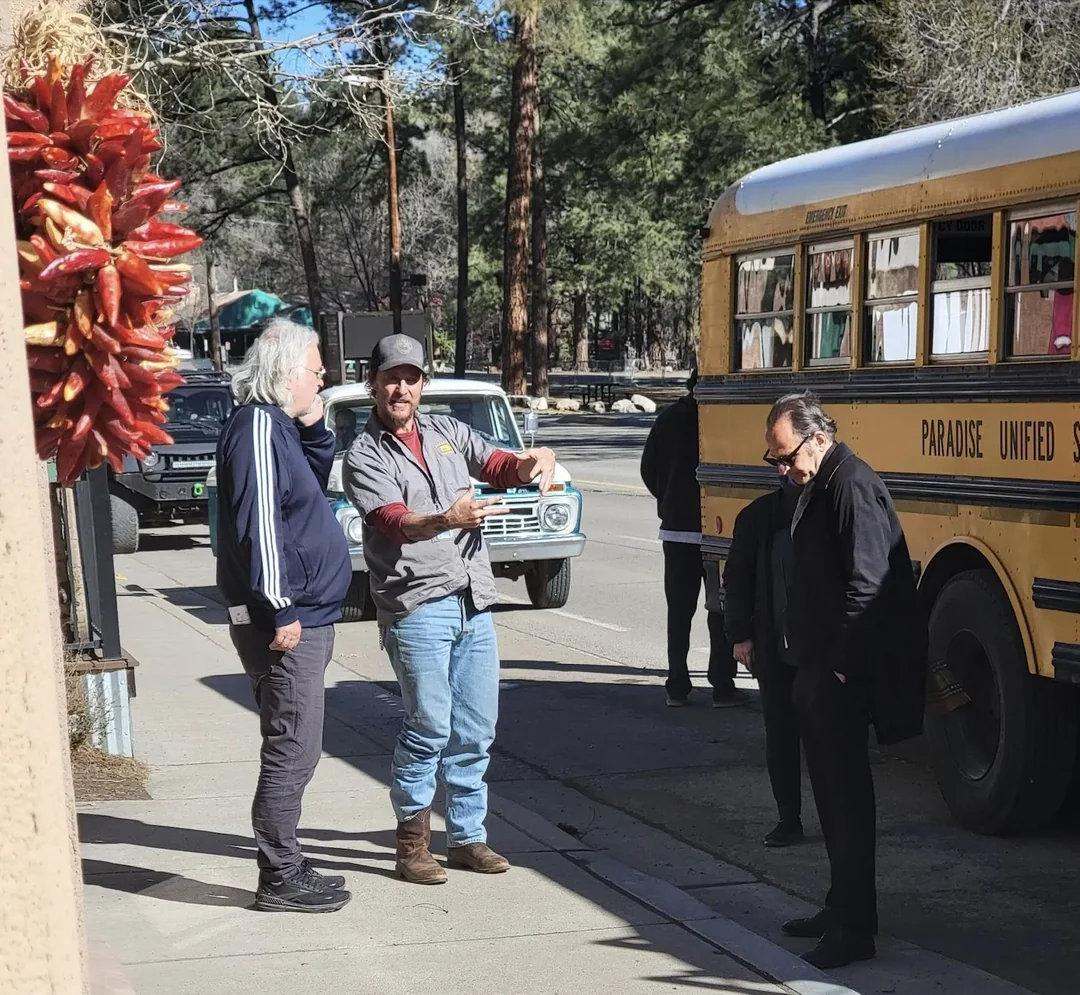
When Mother Nature becomes the ultimate action movie villain
The Lost Bus Paul Greengrass just premiered at Toronto International Film Festival, and honestly? This might be the most important disaster movie since An Inconvenient Truth. The former Bourne director tackles California’s deadliest wildfire with Matthew McConaughey and America Ferrera, delivering both spectacular action and sobering climate reality.
Real Story
The Lost Bus Paul Greengrass adapts true events from 2018’s Camp Fire in northern California, transforming real tragedy into blockbuster entertainment. Greengrass explained his approach: “I want young people to see this film. Anyone who’s got a care to whether the world is burning.” Subtle as a sledgehammer, but climate change doesn’t require subtlety.
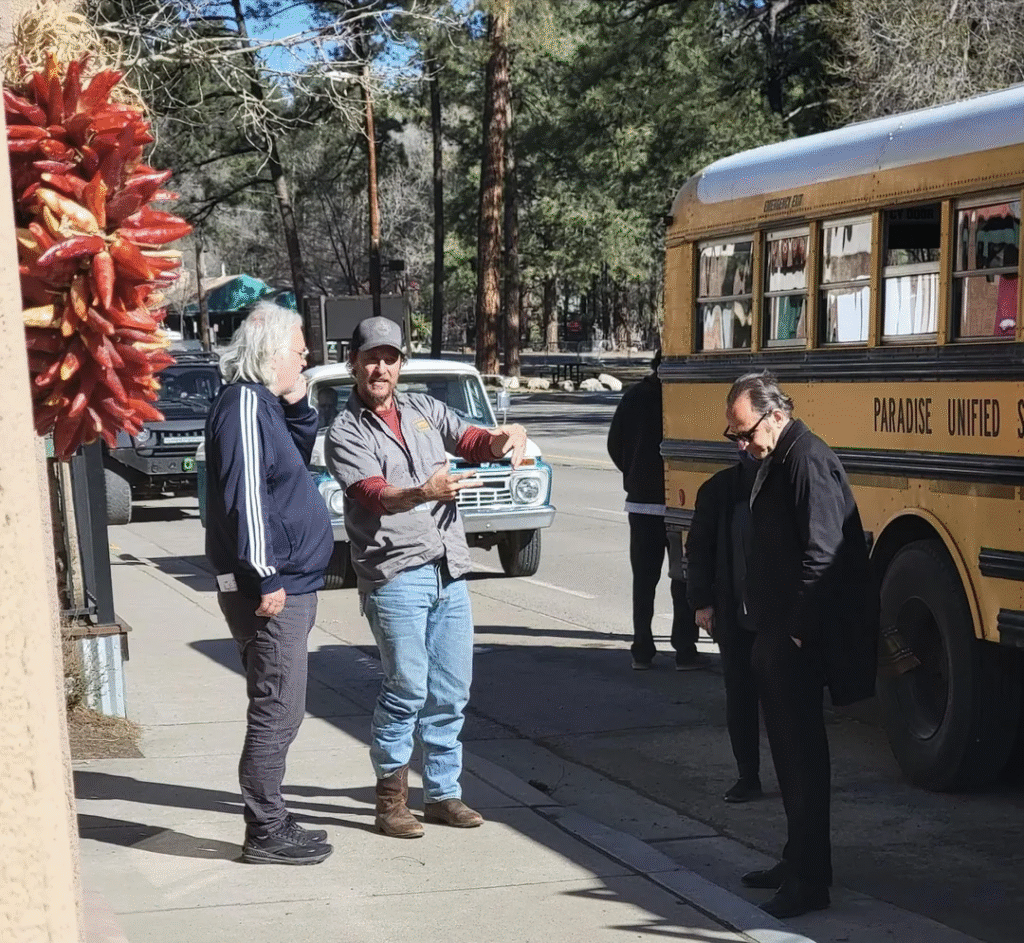
The film follows a bus driver (McConaughey) and teacher (Ferrera) rescuing schoolchildren from wildfire hell. It’s Speed meets The Day After Tomorrow, but with actual scientific basis rather than Hollywood nonsense. Greengrass brings his documentary background to bear on environmental disaster storytelling.
Production Challenge
Initially, Greengrass planned virtual effects after being “absolutely knocked out” by U2’s Sphere show in Las Vegas. “When they played ‘Where the Streets Have No Name’ and they went to the desert, you absolutely believed you were in the desert,” he recalled. But his heart demanded practical filmmaking.
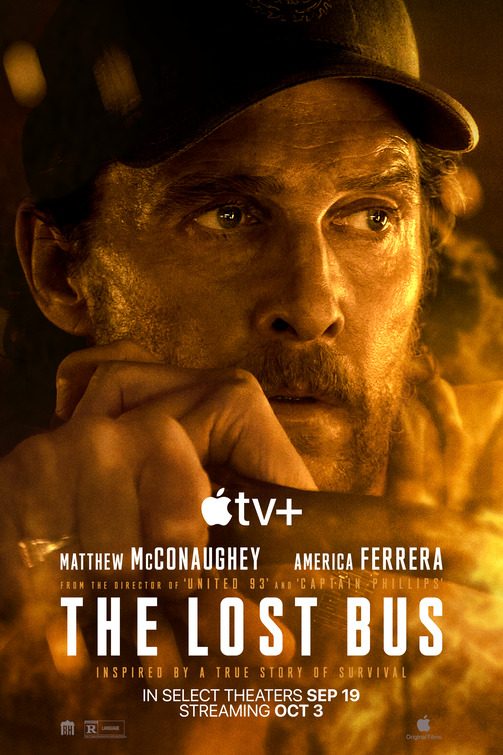
“I just wanted to be in a real world,” Greengrass explained, choosing practical effects over digital convenience. The Lost Bus Paul Greengrass delivers “all the crashing, clattering action you expect” through authentic pyrotechnics rather than computer-generated flames.
Career
Greengrass’s journey from TV journalism to action filmmaker creates perfect credentials for climate disaster stories. His World in Action background taught him “what the world looks like” through covering “war zones,” “apartheid in South Africa,” and “the miners’ strike”.
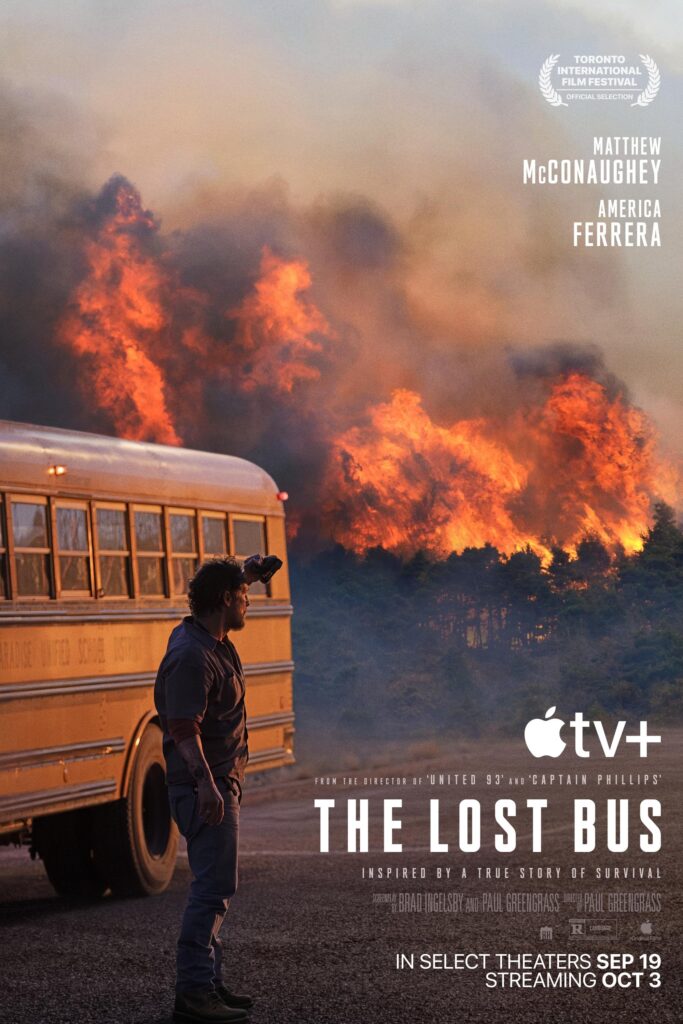
This experience shapes The Lost Bus Paul Greengrass approach to real-world catastrophe. “I found an aesthetic to shape the types of stories that were true to where I’d been,” he explains. Climate disasters require journalistic authenticity rather than typical Hollywood bombast.
Action
Greengrass revolutionized action cinema with The Bourne Supremacy, introducing handheld cameras and crunching sound design that influenced everything from Casino Royale to countless imitators. His “old-fashioned, British, social-realist documentary aesthetic” paradoxically felt contemporary to mobile phone-wielding audiences.
The Lost Bus Paul Greengrass applies this kinetic style to environmental disaster, creating visceral wildfire sequences that feel authentically dangerous rather than digitally sterile. “What I thought was a very old-fashioned aesthetic was what the under-30s were then doing,” Greengrass observed about his accidental prescience.
Streaming
Despite theatrical DNA, The Lost Bus Paul Greengrass premieres on Apple TV+ after brief cinema release. Greengrass accepts this pragmatically: “If you’re going to continue to work and continue to have the privilege of making films, you’ve got to go with how it goes”.
He acknowledges streaming benefits: “The audience for this film will see it 100 times more in all the various different ways that it can be accessed.” Still, there’s something lost when disaster spectacle shrinks to television screens.
Message
The Lost Bus Paul Greengrass carries explicit environmental warning rather than subtle subtext. The director’s target audience—young viewers who’ll inherit climate consequences—needs clear messaging about planetary crisis. Entertainment becomes activism through visceral disaster experience.
Greengrass’s documentary instincts serve climate storytelling perfectly, grounding spectacular action in scientific reality. Whether audiences accept climate lectures wrapped in action thrills remains to be seen.
Also Read: Slow Horses Season 5 – Gary Oldman Can’t Save This Mess