

The Fallout universe operates on a simple, brutal code: trust will get you killed faster than a radscorpion sting. So when the Ghoul, the 200-year-old gunslinger played by Walton Goggins, inevitably betrays his traveling companion Lucy MacLean, it’s hardly a surprise. Yet, the execution of that betrayal in Season 2’s pivotal fifth episode is a narrative earthquake that reshapes the entire emotional landscape of the series.
This isn’t a simple villainous turn; it’s a tragedy 200 years in the making, a devastating act that forces us to re-evaluate every cynical lesson the Wasteland has taught us.
A Deal with the Devil in the Desert
The betrayal is a cold, calculated business transaction. In the crumbling oasis of Freeside, the Ghoul is approached with the only offer that could penetrate his centuries of cynicism: deliver Lucy to her father, the elusive Hank MacLean, and in exchange, Hank will leave the Ghoul’s cryogenically frozen wife and daughter undisturbed in their vault.
For a man who has spent two centuries searching for his lost family, it’s an offer he cannot refuse. The crushing genius of the moment lies in its setup. The Ghoul’s rare moments of kindness toward Lucy—a shared vulnerability, a glimpse of guidance—are retroactively revealed as the cruelest kind of performance, a shepherd gently leading his lamb to slaughter. This confirms the Wasteland’s darkest law: everyone has a price, and the Ghoul’s is the ghost of the family he failed to save.
The Weight of 200 Years: Cooper Howard’s Original Sin
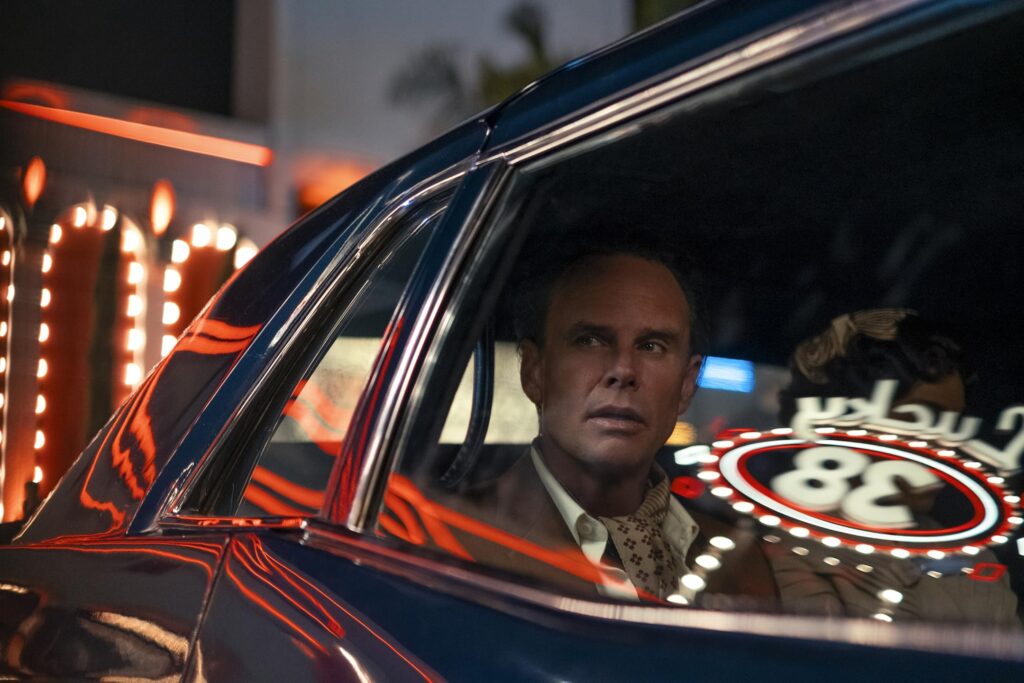
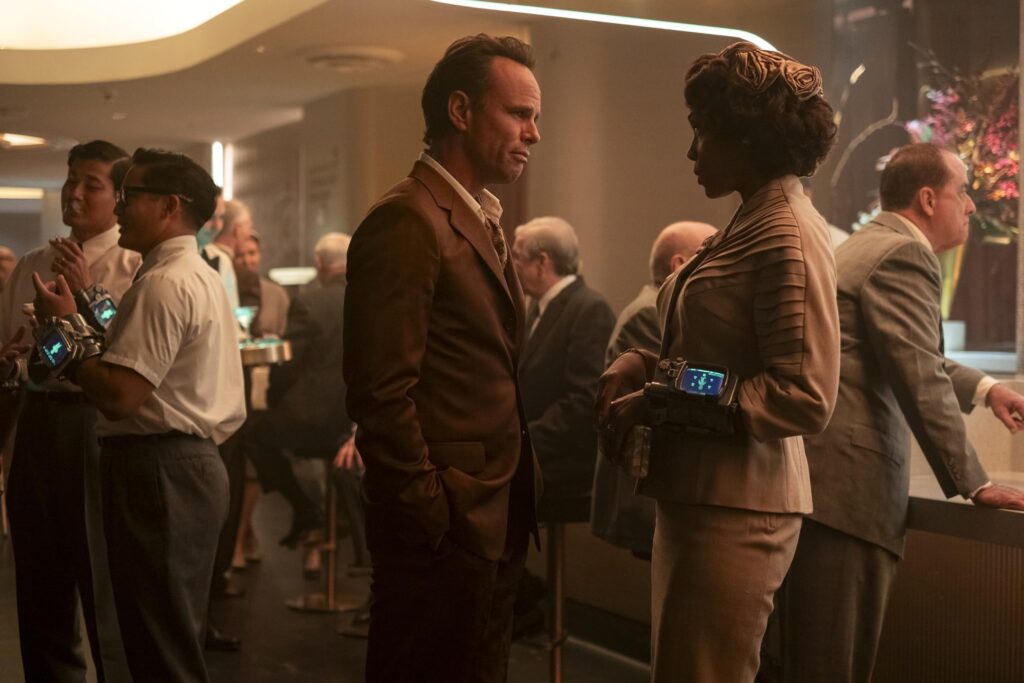
The betrayal lands with such force because the episode simultaneously unveils the ancient sin that created it. In flashbacks to the eve of the Great War, we see Cooper Howard not as a ghoul, but as a whole man—a father and husband navigating the corrupt glitter of pre-war Las Vegas. In a staggering meeting with the enigmatic Robert House, Cooper is handed a cosmic burden. Through cold mathematics, House has predicted the exact date and time of the apocalypse: April 14, 2065, his daughter Janey’s birthday.
Worse, House reveals that Cooper’s own decision to travel to Vegas shifted the doomsday clock a month earlier. Cooper is left not as a victim of history, but as a man who believes he is mathematically intertwined with the end of the world. This original sin—this belief that he authored global annihilation—haunts every one of his 200 subsequent years. His betrayal of Lucy is, in his broken logic, a chance at cosmic penance: sacrificing a new connection to possibly save the original family he feels he doomed.
Lucy’s Resilience and the Unforeseen Variable
The episode’s masterstroke is that it doesn’t let the Ghoul’s tragic logic stand unchallenged. His centuries-old plan fails to account for one variable: Lucy MacLean herself. Her unwavering, principled humanity, which he has spent weeks mocking, has secretly forged a connection. The guilt that flickers in his eyes isn’t just an act; it’s the faint spark of a conscience he thought was long dead. This spark gives Lucy the ferocious will to fight back, turning his cold betrayal into a brutal, near-fatal confrontation. She is not a passive victim but an active force, proving that the Wasteland’s cycle of betrayal can be broken by sheer, stubborn goodness.
What Happens Next? The Path to Redemption or Ruin
The fallout from this betrayal leaves both characters irrevocably changed. The Ghoul is left not as a victorious villain, but as a figure of profound tragedy—impaled and abandoned, having committed the ultimate act of treachery in service of a redemption that remains forever out of reach. Lucy, physically wounded but morally steeled, must now navigate the dangers of New Vegas alone, her trust shattered but her purpose hardened.
The episode forces the question: can a man defined by a 200-year-old mistake ever change? Can a bond forged in mutual survival ever be repaired after such a fundamental breach? Fallout has always been about the monsters we become to survive, but this twist asks a harder question: what does it cost to become human again?
Also Read: Why Critics Are Rallying Behind The Rip Gritty Authenticity