
There’s a reason why Hogwarts houses specifically warn against the Dark Arts, and it’s not just because the lighting is bad and the furniture is uncomfortable. In the Marvel Cinematic Universe, magic comes in flavors, and Wanda Maximoff ended up with the equivalent of ghost pepper hot sauce when everyone else was sipping chamomile. The question isn’t why she uses magic—it’s why she specifically had to draw from the darkest corners of the multiverse to become the Scarlet Witch.
The answer starts with genetics but ends with trauma, which is basically the theme of every interesting character in fiction. Wanda was born with a latent magical gene inherited from her mother, which gave her a “spark” to access mystical energies. But here’s where it gets spicy: while she was still in the womb, her father was possessed by Chthon, an elder god who is essentially the cosmic equivalent of that one toxic ex who won’t stop texting. This possession altered Wanda’s spiritual DNA, creating a connection to chaos magic that would define her entire existence.
Most magic users in the MCU—Doctor Strange, Wong, the Masters of the Mystic Arts—draw power from dimensional energies that they channel through incantations, artifacts, and really fancy hand gestures. They exploit loopholes in reality’s operating system. But Wanda doesn’t draw from the same sources. Her chaos magic doesn’t manipulate reality; it replaces reality’s laws with her own. It’s the difference between hacking a computer and rewriting the code entirely.
The “dark” aspect comes from where she pulls this power. While conventional sorcerers might tap into benign dimensional energies, Wanda’s chaos magic draws from the Realm of Madness—essentially a sealed-off dimension of the multiverse filled with exactly the kind of emotional turmoil that Wanda had in abundance. Grief over her parents. Rage over her brother’s death. Desperation to create a family that was never meant to be. Her powers don’t just work better when she’s emotional; they literally feed on heartache, anger, and fear.
This explains why the Darkhold was so seductive to her. The cursed spellbook didn’t corrupt Wanda so much as it amplified what was already there—a witch whose magic naturally gravitates toward the dark because that’s where her pain lives. When she absorbed Agatha Harkness’s dark magic and converted it into chaos magic, she wasn’t cleansing it; she was making it her own. The Darkhold simply gave her the syntax to express what she was already feeling.
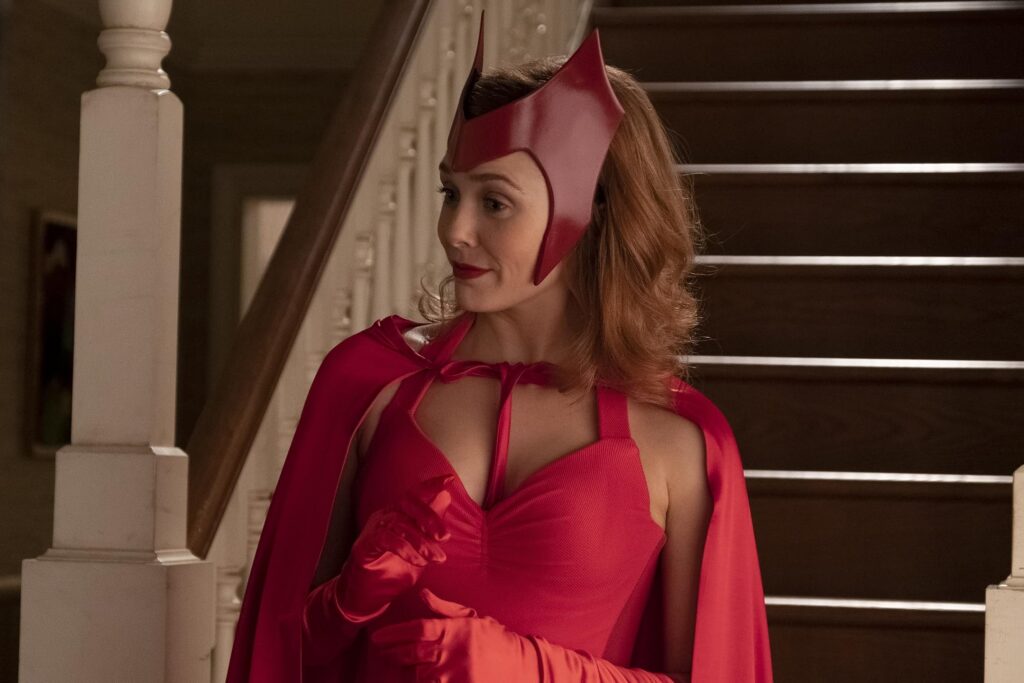
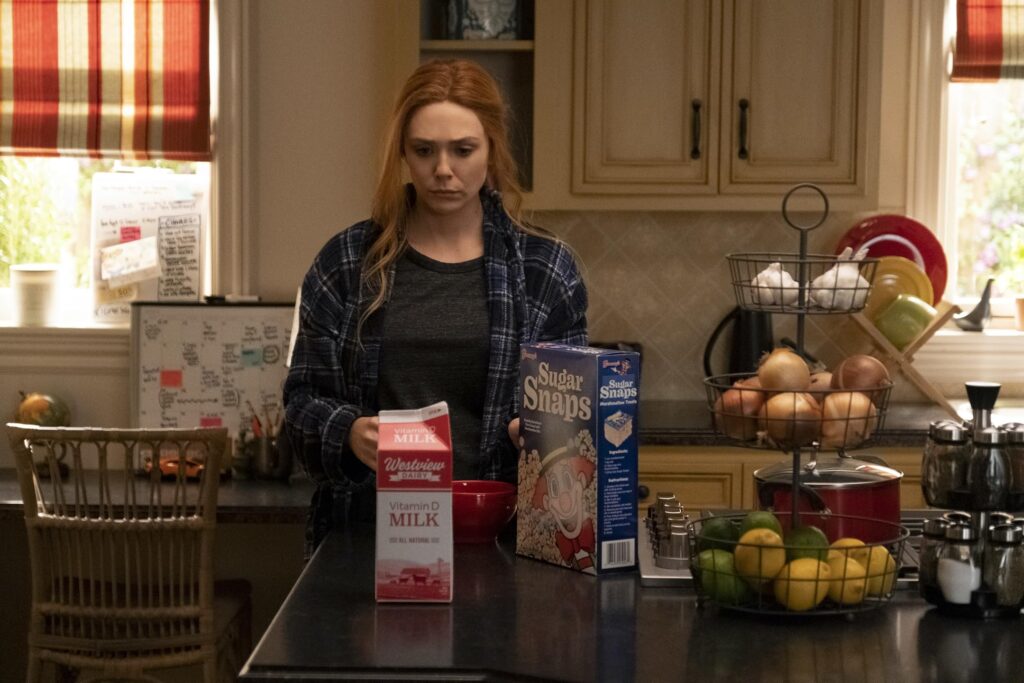
The tragedy is that Wanda didn’t choose this path. She didn’t wake up one day and decide to be the villain. Her power source was determined before she was born, shaped by forces she couldn’t control, and activated by trauma no one should have to endure. When she creates Westview, when she fights Thanos, when she dreams of her children, she’s not drawing from some well of benevolent light. She’s reaching into the void where grief lives and pulling out power that looks like crimson energy and black vapor.
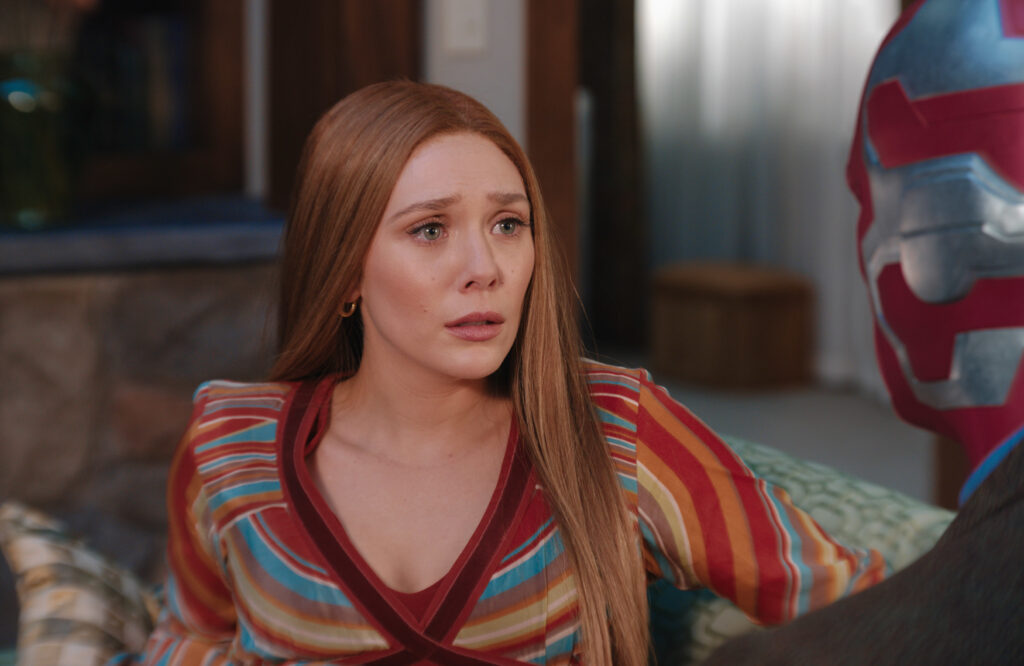
In a universe where Captain America gets his strength from patriotism and Tony Stark builds his suits in caves, Wanda’s power source is uncomfortably intimate. She doesn’t need a reactor or a shield. She needs her pain. And that makes her both the most powerful Avenger and the most vulnerable—a walking paradox who can rewrite reality but can’t rewrite her own trauma.
The darkness isn’t a choice. It’s inheritance.
Explore the mystery—stream WandaVision and Doctor Strange in the Multiverse of Madness to trace Scarlet Witch’s journey from Avenger to avatar of chaos.
Also Read: Charlie Cox Playing Daredevil 11 Years Journey Marvel Netflix Disney Plus Evolution