
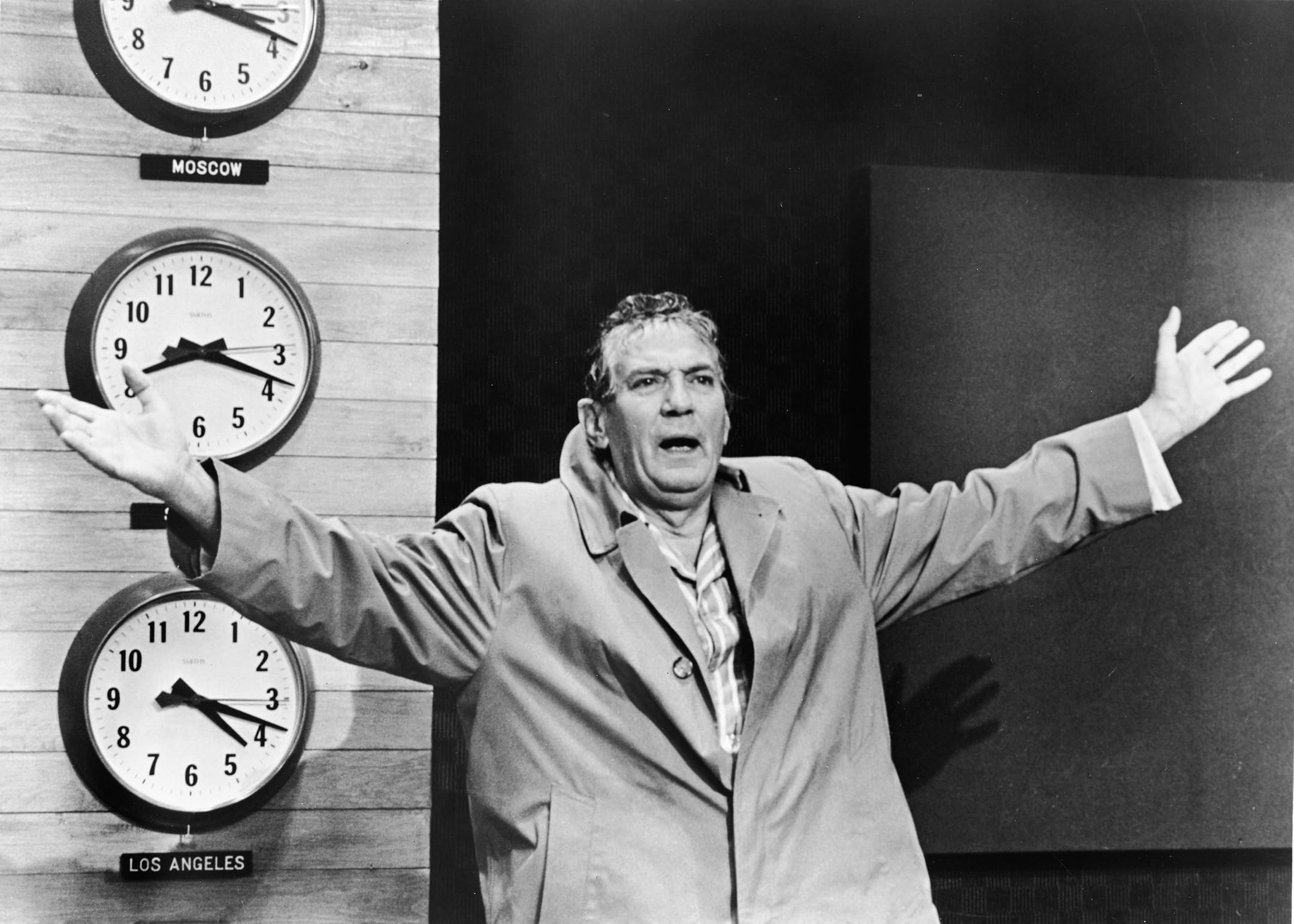
Network 1976 is nearly fifty years old, and it has never felt more relevant. Sidney Lumet’s blistering satire about the television industry, the news media, and the commodification of human suffering arrived in theaters when Gerald Ford was president and has only grown more prophetic with each passing decade. If you haven’t watched Network 1976 recently, prepare to be unsettled by how accurately it predicted our current moment.
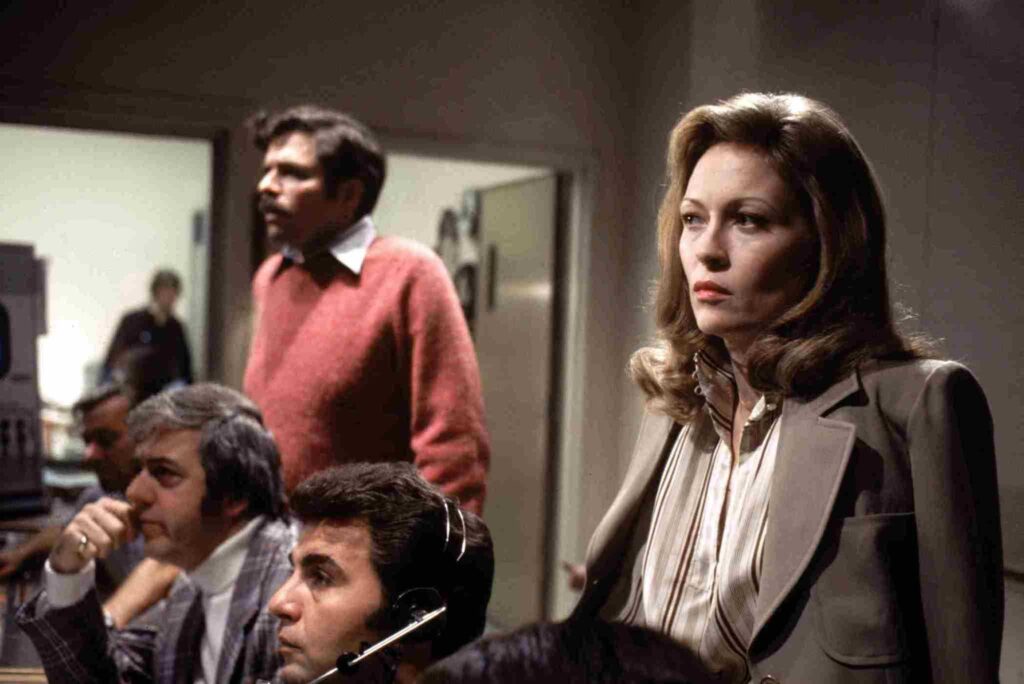
The film follows Howard Beale, a veteran news anchor played by Peter Finch in an Oscar-winning performance. When Beale learns he’s being fired due to declining ratings, he announces on live television that he will commit suicide during his final broadcast. Instead of treating this as a tragedy, the network sees an opportunity. Diana Christensen, the ambitious programming executive played by Faye Dunaway, transforms Beale’s breakdown into a ratings phenomenon. “I’m mad as hell, and I’m not gonna take this anymore” becomes a national catchphrase, a movement, a product line.
Network 1976 works because it understands that television doesn’t just reflect reality—it manufactures it. Beale’s genuine anguish about the state of the world is packaged, marketed, and sold back to audiences as entertainment. His “mad as hell” speech, which should be a call to action, becomes a ritualized performance that allows viewers to feel like they’re doing something without actually doing anything. Sound familiar?
Lumet directs with the urgency of a man who sees the future and doesn’t like it. The camera work is frenetic, the editing is jarring, and the performances operate at a pitch just below hysteria. Network 1976 isn’t subtle, but subtlety would be a betrayal of its subject matter. The film is shouting because the only way to compete with television is to out-shout it.
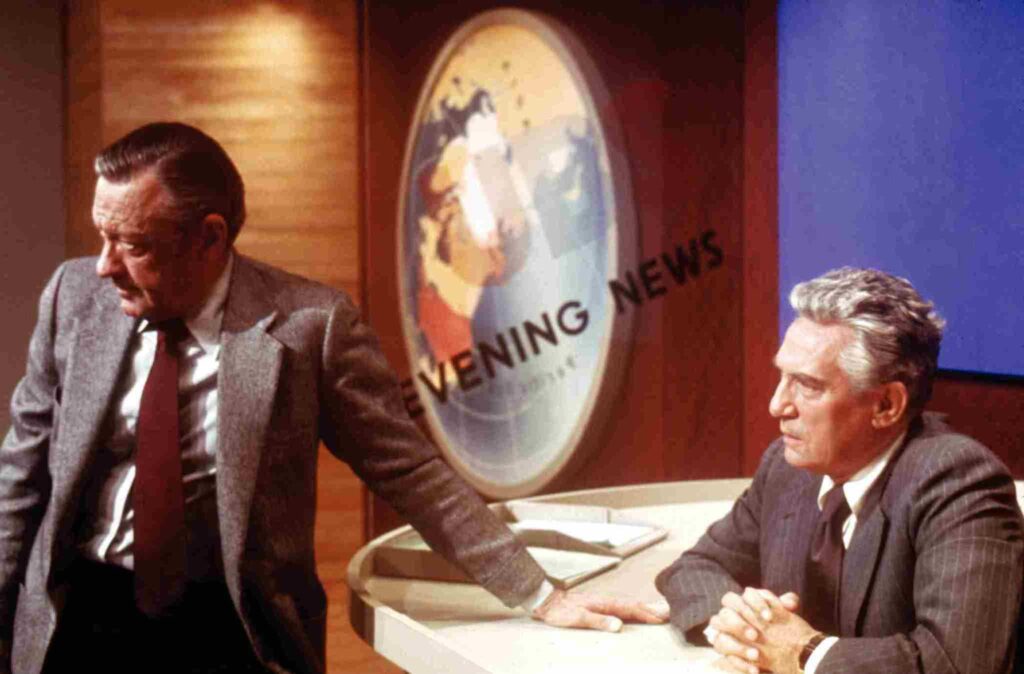
Paddy Chayefsky’s screenplay won the Oscar and remains one of the most quotable scripts ever written. Lines like “Television is not the truth. Television is a goddamn amusement park” land with the force of prophecy. Network 1976 predicted reality television, influencer culture, and the transformation of news into infotainment decades before those terms existed. It’s not a satire anymore; it’s a documentary.
The performances in Network 1976 are uniformly extraordinary. Finch’s Beale is a man consumed by his own sincerity, destroyed by the very system he tries to critique. Dunaway’s Diana is a force of nature, a character so focused on ratings that she has forgotten what real human connection feels like. William Holden’s Max Schumacher, the news division president who tries to maintain his integrity, represents the old guard being swept away by the new amorality.
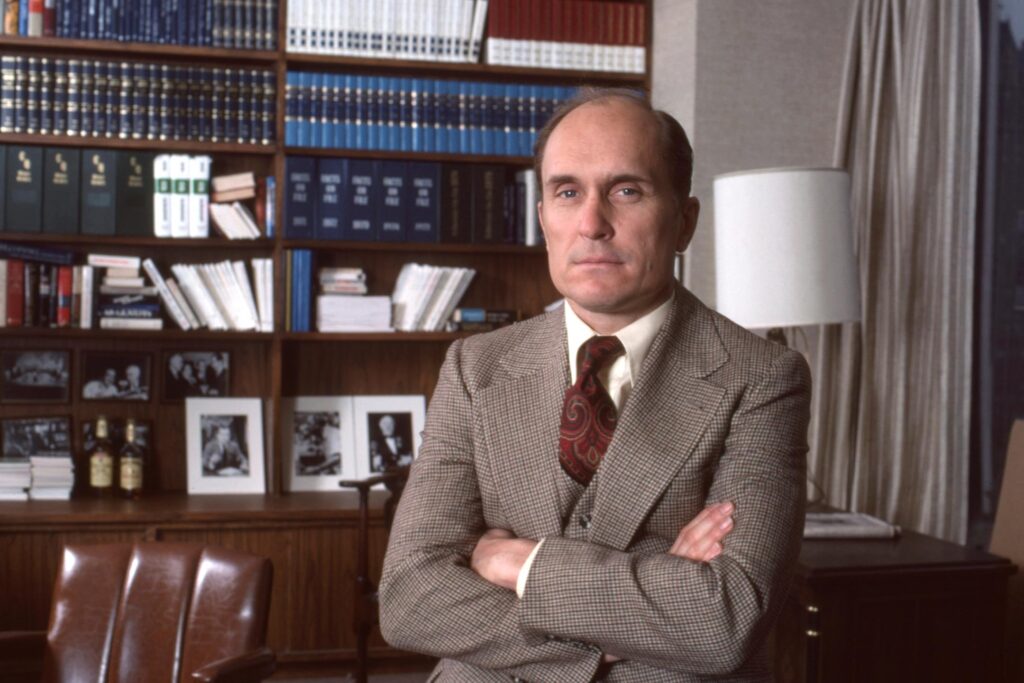
Network 1976 also features one of the most devastating monologues in cinema history, delivered by Ned Beatty as Arthur Jensen, the corporate chairman who explains to Beale that there are no nations, no peoples, only corporations and the flow of capital. “You have meddled with the primal forces of nature, Mr. Beale,” Jensen intones, and the speech is so powerful, so chillingly accurate, that it makes you want to burn your television and move to a cabin in the woods.
But Network 1976 isn’t just prescient—it’s also deeply human. For all its cynicism about media, the film has genuine compassion for its characters. Beale isn’t a villain; he’s a victim. Diana isn’t evil; she’s a product of the system she serves. The tragedy of Network 1976 is that everyone is trying to survive in a world that rewards the worst aspects of human nature.
Watching Network 1976 in 2026 is a disorienting experience. You laugh at the satire, then realize it’s not satire anymore. You nod at the predictions, then realize they’ve already come true. You admire the performances, then realize the actors were playing people who didn’t know how bad things would get.
Get mad—stream Network 1976 and discover why a fifty-year-old film understands your phone better than you do.
Also Read: Fall 2 Sequel Takes Terror to New Heights