

Clayface is not being treated as another superhero villain waiting for Batman to arrive. Director James Watkins says the film begins with a man whose life falls apart before his body becomes a horror show. Matt Hagen is an actor whose face is central to his career, and a violent attack leaves him desperate to recover the future he believes was stolen.

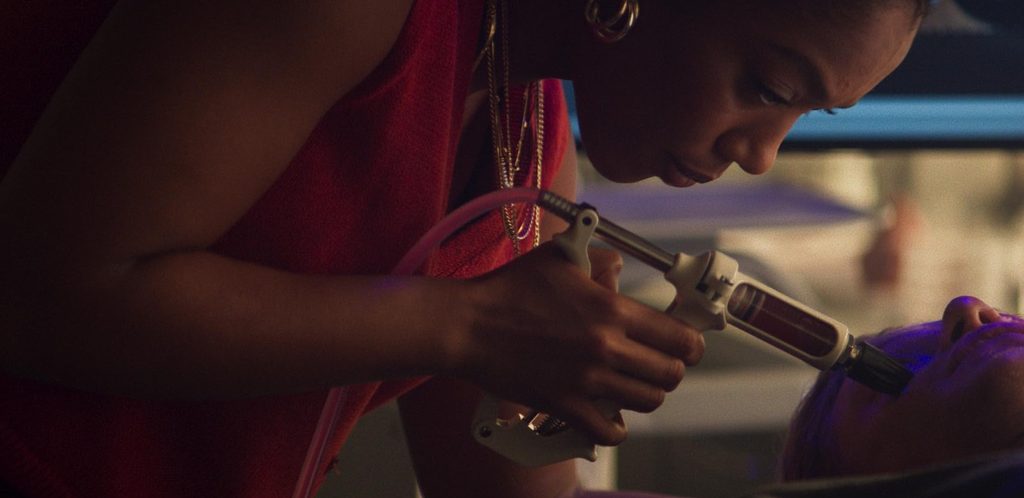
Tom Rhys Harries plays Hagen, who turns to an experimental treatment after conventional options fail. Dr. Caitlyn Corr, played by Naomi Ackie, is connected to the procedure, which initially appears to restore his appearance. The results soon become unstable, and Hagen’s body begins to change in ways he cannot control. His abilities make him dangerous, but the film’s focus is the emotional path that turns desperation into revenge.
Watkins has explained that what interested him was not simply the prospect of making a comic-book monster look grotesque. Hagen has worked hard to build a life, and then loses it through circumstances he sees as profoundly unfair. The temptation to strike back becomes a way to explore a darker question: how much of a monster is created by the body, and how much comes from the choices a person makes after being hurt?
That approach puts Clayface closer to body horror than a traditional superhero origin story. Watkins has pointed to David Cronenberg’s The Fly as an influence, especially its focus on a human being whose transformation becomes physically and emotionally horrifying. The comparison is useful because the terror is not only that Hagen’s body changes. It is that he remains recognizable to himself even as other people struggle to recognize him.
The director wants Gotham to feel real rather than like a glossy franchise backdrop. His production design draws on older New York street photography and 1930s films, creating narrow streets, deep shadows and an oppressive atmosphere. Even a nightclub’s wallpaper resembles raw meat, a small touch that makes the city feel deeply uncomfortable.
The setting reflects Hagen’s decline. He is an actor in a city that rewards appearance, status and the ability to make people believe what they see. When his face is damaged, he loses the tools that made him professionally valuable. The experimental treatment promises to restore those tools, but it also makes appearance unstable. If he can become anyone, what happens to the person he was trying to save?
This makes the film’s horror more personal than a simple revenge plot. Hagen has genuine reasons to feel betrayed, but the story does not have to excuse everything he does next. Watkins is interested in the point where victimhood becomes a justification for harming others. That tension can give Clayface a stronger emotional center than a villain origin story that treats violence as an inevitable response.
Harries and Ackie lead a screenplay by Mike Flanagan and Hossein Amini, directed by Watkins. This DC film centers on one character’s collapse rather than a crossover.
Clayface opened in U.S. theaters on October 23, 2026. The most promising part of Watkins’ approach is his insistence that the horror should grow out of Hagen’s humanity. A monster is more frightening when you can see how he became one.
Also Read: The Odyssey Earns a Place Among 2026’s Standout Films