
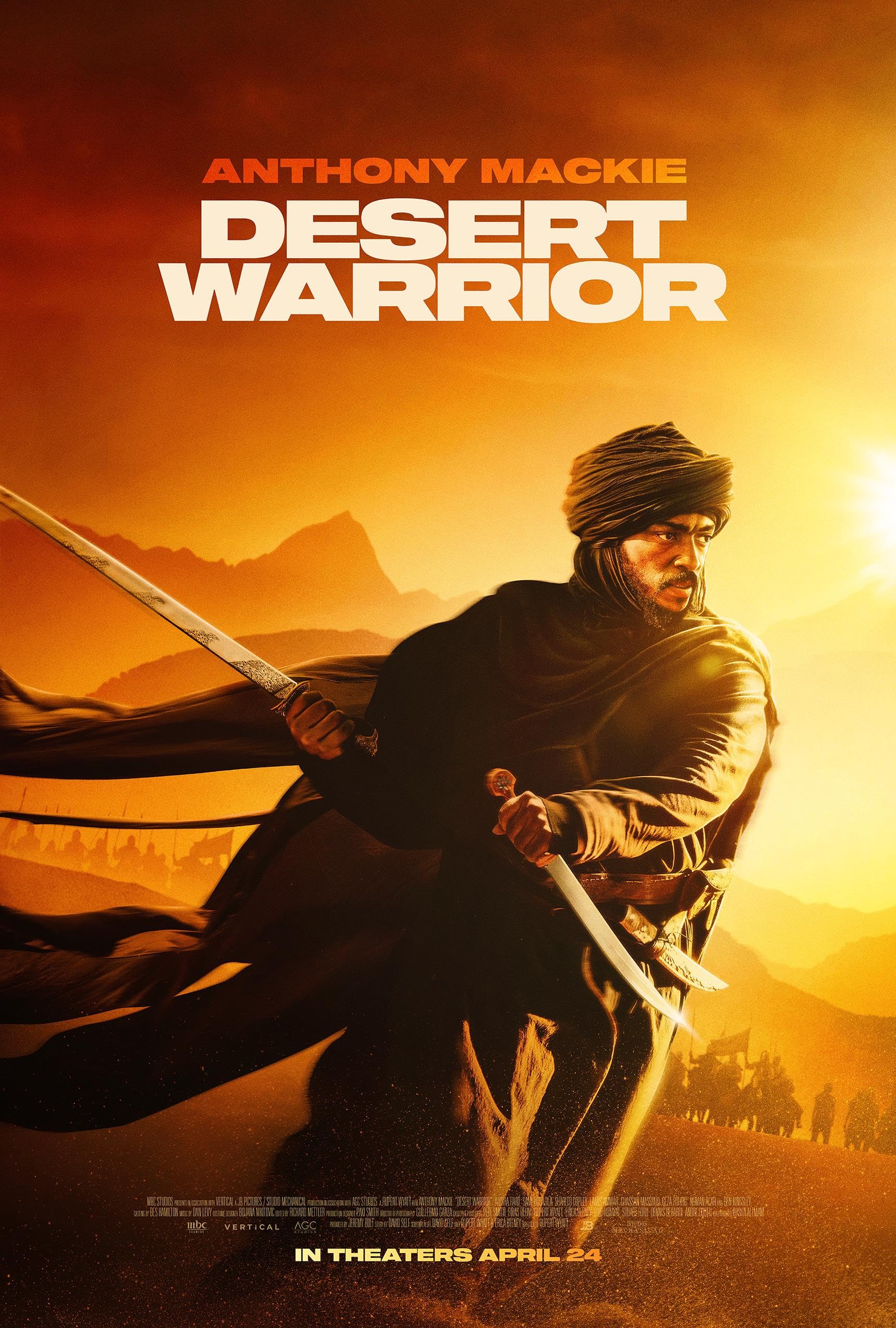
Anthony Mackie has fought aliens as Captain America, battled supernatural forces as a detective, and now he’s leading a seventh-century Arabian rebellion against Sir Ben Kingsley’s evil emperor. The first poster for Desert Warrior has arrived, and it promises exactly the kind of historical epic that studios stopped making sometime around the Gladiator sequel—sweeping desert landscapes, brutal hand-to-hand combat, and a princess who refuses to accept her fate as a concubine.
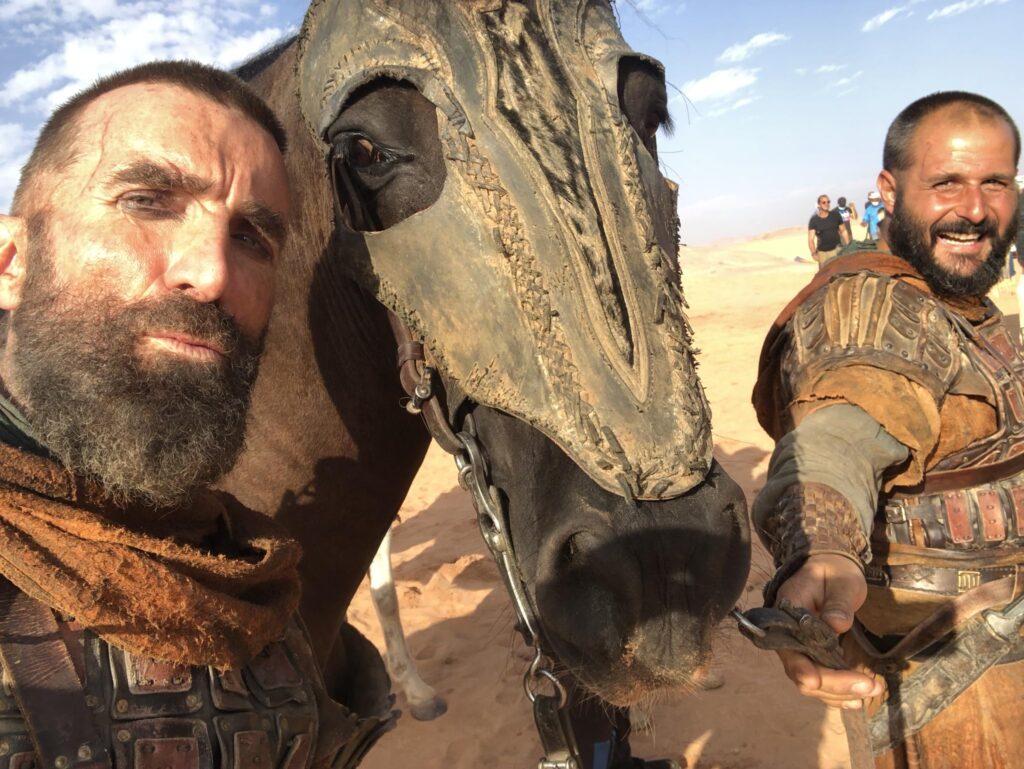
Set in seventh-century Arabia, the film follows Princess Hind (Aiysha Hart), who defies Emperor Kisra (Kingsley) by refusing to become his concubine—a decision that carries roughly the same survival rate as insulting the emperor’s mother, but with worse long-term prospects. Fleeing into the desert with her father, Hind is hunted by Kisra’s merciless army and forced to trust Akitha (Mackie), a legendary bandit with secrets of his own. Together, they unite warring tribes for the Battle of Dhi Qar, a historical clash that apparently changed history forever, though most Western audiences have never heard of it.
Director Rupert Wyatt, best known for the surprisingly excellent Rise of the Planet of the Apes, co-wrote the screenplay with Erica Beeney and David Self. His involvement suggests that Desert Warrior will balance spectacular action with genuine character development, much like Apes managed to make audiences care about CGI primates. The film marks a return to large-scale filmmaking for Wyatt, who has spent the years since Apes working on smaller projects like The Gambler and Captive State.
The cast is refreshingly international. Alongside Mackie and Kingsley, the film features Aiysha Hart (A Discovery of Witches) as Princess Hind, Ghassan Massoud (Kingdom of Heaven) bringing gravitas to the Arabian setting, and Sharlto Copley (District 9) as what one assumes is either a villain or a very confused time traveler. The ensemble suggests a production that prioritized authentic representation over Hollywood star power, with Mackie serving as the audience entry point into this specific historical moment.
The poster itself emphasizes the harsh beauty of the setting. Mackie’s Akitha looks weathered and determined, Kingsley’s Kisra looks appropriately regal and menacing, and the desert landscape behind them promises the kind of widescreen spectacle that demands theatrical viewing. This is not a film designed for streaming on your phone; this is a film that wants to fill your peripheral vision with sand and sun and swinging swords.
The historical setting—the seventh century, the early days of Islam, the Battle of Dhi Qar—provides fertile ground for epic storytelling. This was a period of massive political and religious upheaval, when the Persian Empire clashed with Arab tribes and the old world order began to crack. By focusing on Princess Hind’s resistance and the bandit who becomes her unlikely ally, the film appears to be taking a personal approach to history, using the grand canvas for an intimate story about freedom and defiance.
Mackie’s casting is particularly interesting given his recent elevation to Captain America in the Marvel Cinematic Universe. Desert Warrior represents the kind of project that Marvel stars traditionally use their clout to make—historical epics that remind audiences they can do more than punch CGI aliens. If successful, it could open doors for more diverse historical storytelling, more films set in periods and places that Hollywood has traditionally ignored.
Vertical is releasing Desert Warrior in theaters on April 24, 2026, positioning it as counter-programming to the summer’s bigger blockbusters. For audiences tired of superheroes and sequels, it offers something increasingly rare: a standalone story about real history (or at least history-adjacent events), told with practical effects and human stakes.
Answer the call—see Desert Warrior in theaters April 24, 2026, and witness Anthony Mackie lead the most unexpected historical epic of the year.
Also Read: Skyfall 2012 Opening Title Sequence Sam Mendes Daniel Kleinman Analysis