

When Dune: Part Two opened to $82.5 million domestically in March 2024, it proved that Denis Villeneuve’s vision of Frank Herbert’s universe could transcend the streaming era and become genuine blockbuster event cinema. With $714.8 million worldwide against a $190 million budget, the sequel outperformed its predecessor by nearly $300 million, establishing momentum that makes Dune: Part 3 one of the most financially anticipated releases of 2026.
But can a film about the consequences of messianic rule—a darker, more philosophical story that jumps forward seventeen years—match or exceed those numbers?
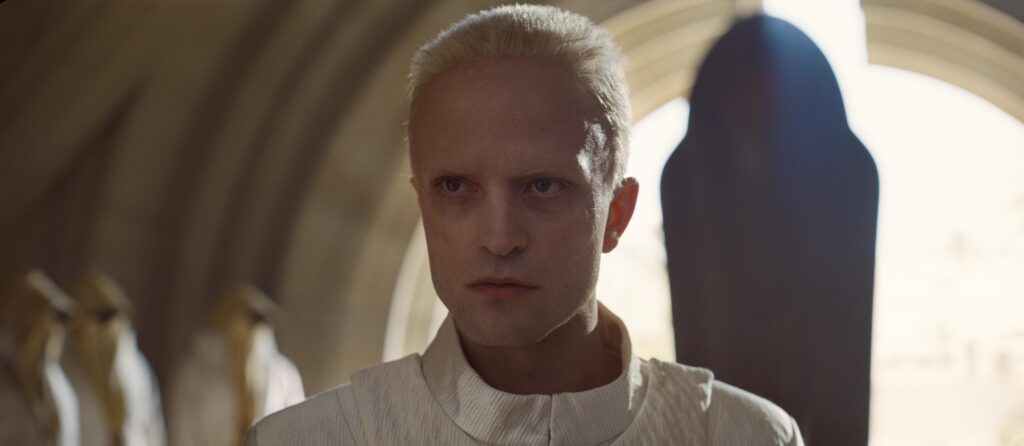
The box office mathematics for Part Three are complicated by its unprecedented competition. The film opens December 18, 2026, sharing the date with Avengers: Doomsday in what industry watchers have dubbed “Dunesday”. This head-to-head matchup between two of pop culture’s biggest franchises creates a zero-sum game for IMAX screens and premium format availability. While Avengers will dominate the multiplexes, Dune Part 3’s reliance on IMAX for its visual spectacle—Villeneuve shot significant portions on IMAX film for the first time in his career—means the limited availability of those screens could cap its opening weekend potential.
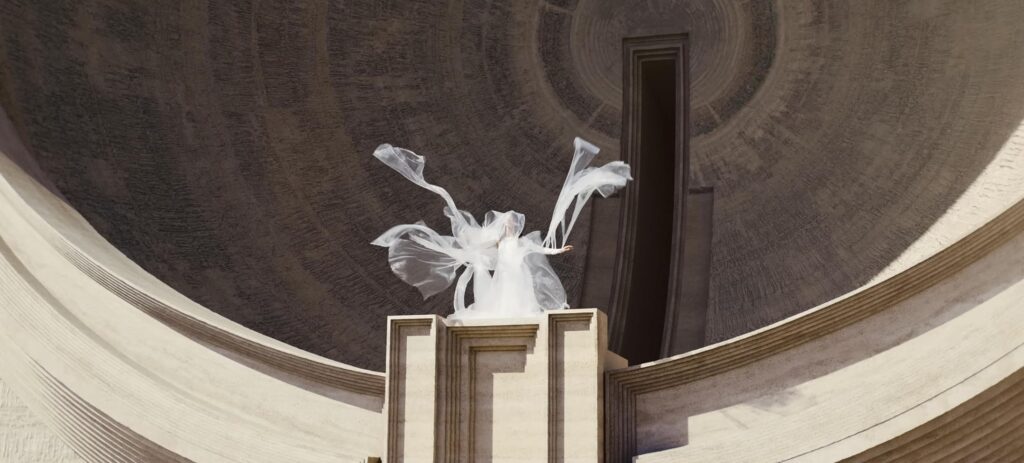
Historically, the Dune franchise has shown steady growth. Part One earned $410.6 million worldwide on a $165 million budget in 2021—a respectable but not spectacular return during the pandemic era. Part Two’s $714.8 million represented a 74% increase, demonstrating that word-of-mouth and critical acclaim (the sequel sits at 92% on Rotten Tomatoes) can drive audience expansion. The threequel faces the challenge of maintaining that growth trajectory while adapting Dune Messiah, a novel that is deliberately anti-climactic and existentially bleak compared to the hero’s journey structure of the first book.
The demographic data suggests challenges. Dune Part 2 skewed heavily male (62%) and over-25 (72%), a demographic that has become increasingly unreliable for theatrical attendance. The film’s dense political intrigue and religious themes, while appealing to older audiences, may struggle to capture the younger viewers and women who drive repeat viewings and social media buzz.
Zendaya’s expanded role in Part Three—the trailer emphasizes that “the heartbeat of the film is still the relationship between Paul and Chani”—may help broaden appeal, but the seventeen-year time jump and Paul’s morally compromised position as emperor complicate the romantic marketing angle.

Budget concerns also loom. Part Three reportedly carries a $200+ million price tag, meaning it needs to clear $500 million worldwide to be considered profitable. With Avengers: Doomsday likely commanding the majority of December’s blockbuster dollars, Dune Part 3 will need exceptional legs—sustained audience interest beyond opening weekend—to reach that threshold. The first two films showed strong holds, dropping only 44% and 37% in their second weekends respectively, suggesting that positive word-of-mouth could overcome the competitive disadvantage.
The “Dunesday” phenomenon might actually help both films. The Barbenheimer effect of 2023 demonstrated that counter-programming can create a cultural event that benefits both movies, driving total box office higher than either would achieve alone. If audiences make a day of it—Avengers in the morning, Dune at night—both films could see boosted attendance. But this requires theaters to maintain showtimes for both throughout the holiday season, a scheduling challenge when blockbusters typically demand exclusive runs.

International markets will be crucial. Dune Part 2 earned 58% of its gross overseas, with particularly strong showings in China and Europe. The threequel’s reliance on political and religious themes—Paul’s jihad has killed billions, and the film explores the cost of empire—may play differently across cultural contexts. Villeneuve’s reputation as an auteur who respects his source material while making it accessible should help, but Messiah’s deliberately subversive narrative poses unique marketing challenges.
Current projections suggest an opening weekend between $60-80 million domestic, with final totals in the $600-750 million range worldwide—similar to Part 2’s performance but not the exponential growth Warner Bros. might hope for. The film’s artistic merits—Villeneuve calls it his “most personal” and “most muscular” yet—may generate awards season buzz that extends its theatrical run into 2027, but as a financial proposition, Dune Part 3 is betting that audiences want a blockbuster that questions the very nature of heroism.
Analyze the numbers—see Dune Part 3 in theaters December 18, 2026, and witness whether Denis Villeneuve’s ambitious conclusion can conquer the box office.
Also Read: Most Anticipated Original Films 2026 Upcoming Releases Calendar