
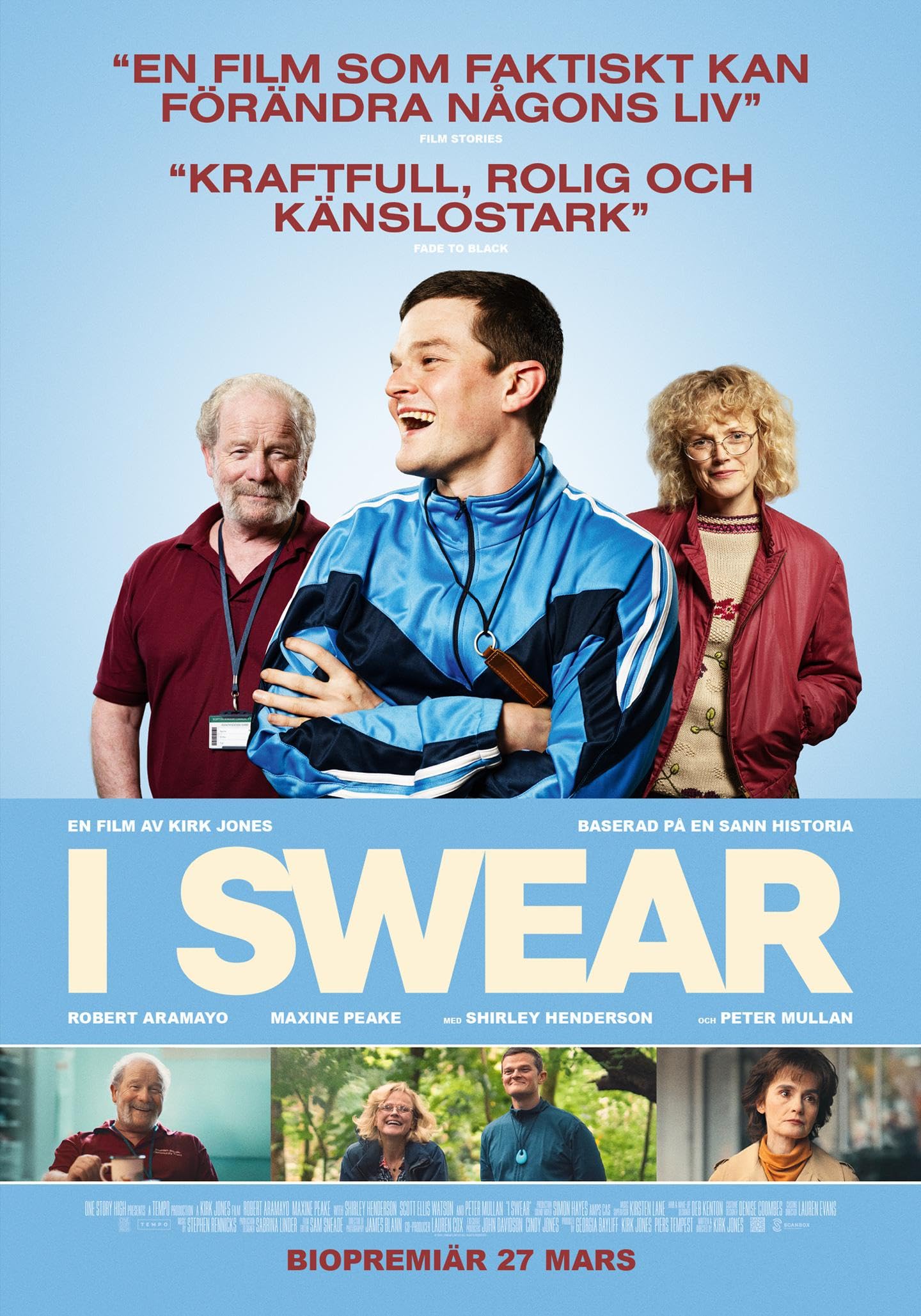
There are two ways to make a movie about disability: the Hallmark way, where inspiration porn meets soft lighting and everything resolves with a hug, and the honest way, where the condition is part of the character but doesn’t define them, where laughter and pain coexist, and where the protagonist is allowed to be a complete human being rather than a symbol. I Swear chooses the second path, and the result is one of the most unexpectedly moving films of the year—a biopic about Tourette’s syndrome that manages to be genuinely funny without ever punching down.
Robert Aramayo stars as John Davidson, a Scottish teenager diagnosed with Tourette’s in the 1980s, when the condition was so poorly understood that most people assumed sufferers were either possessed by demons or faking for attention. The film follows Davidson from his diagnosis at age 15 through his struggles with isolation, medication, and societal rejection, to his eventual emergence as a campaigner for Tourette’s awareness who would receive an MBE from the Queen in 2019. It’s a classic underdog story, but director Kirk Jones—best known for Waking Ned and Nanny McPhee—refuses to sanitize the rough edges.
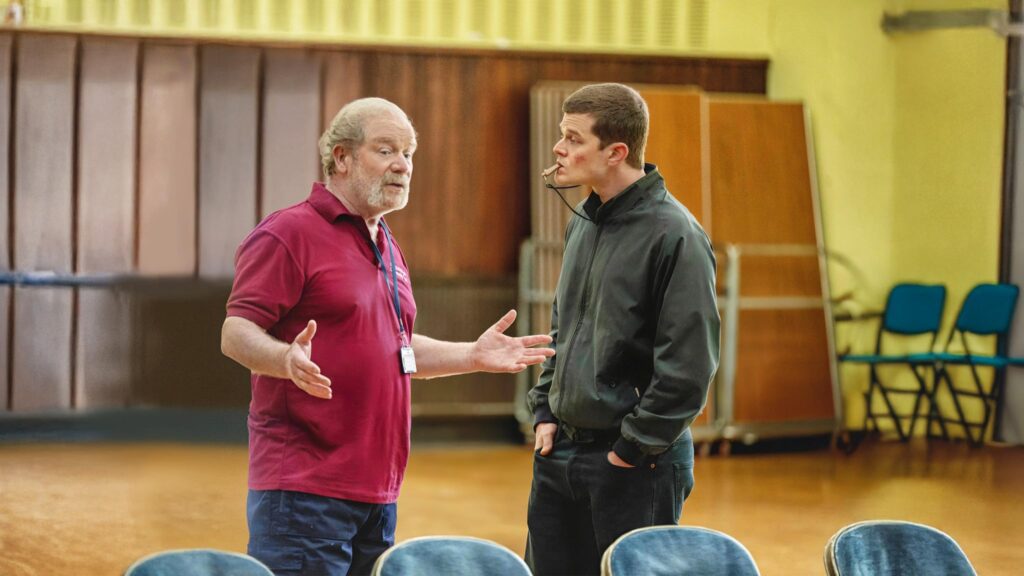
What makes I Swear remarkable is how it handles the tics themselves. Aramayo doesn’t perform them as a gimmick or a showy acting exercise; he embodies them as part of John’s physical reality, something that causes him pain and embarrassment but also becomes part of his identity. The film doesn’t shy away from the violent nature of severe Tourette’s—the involuntary movements that can cause physical injury, the vocal outbursts that make public spaces terrifying—but it also finds humor in the absurdity of the situations John finds himself in. When your body forces you to shout obscenities in church, you can either cry or laugh. John does both.
The supporting cast elevates the material beyond standard biopic fare. Maxine Peake plays Dottie, a woman who becomes John’s support system and eventual partner, bringing warmth and steel in equal measure. Peter Mullan appears as Tommy, a mentor figure who helps John find his voice as an advocate. Shirley Henderson rounds out the ensemble as John’s mother, struggling to understand a condition that medical science barely comprehended.

Set in Galashiels, Scotland, the film captures the specific texture of 1980s British working-class life—the poverty, the community, the limited options for anyone who didn’t fit the mold. John’s journey isn’t just about managing his tics; it’s about finding a place in a world that would rather institutionalize him than accommodate him. When he discovers that his involuntary vocalizations can be harnessed for performance—turning his condition into a tool for education and advocacy—it’s a revelation that feels earned rather than scripted.
The film has earned a 97% on Rotten Tomatoes, with critics praising its refusal to patronize either its subject or its audience. It’s the kind of small-scale, heartfelt drama that rarely gets made anymore—no explosions, no CGI, no franchise potential, just human beings struggling and connecting and growing. Aramayo’s performance has generated Oscar buzz, which would be well-deserved for a role that required such technical precision and emotional vulnerability.
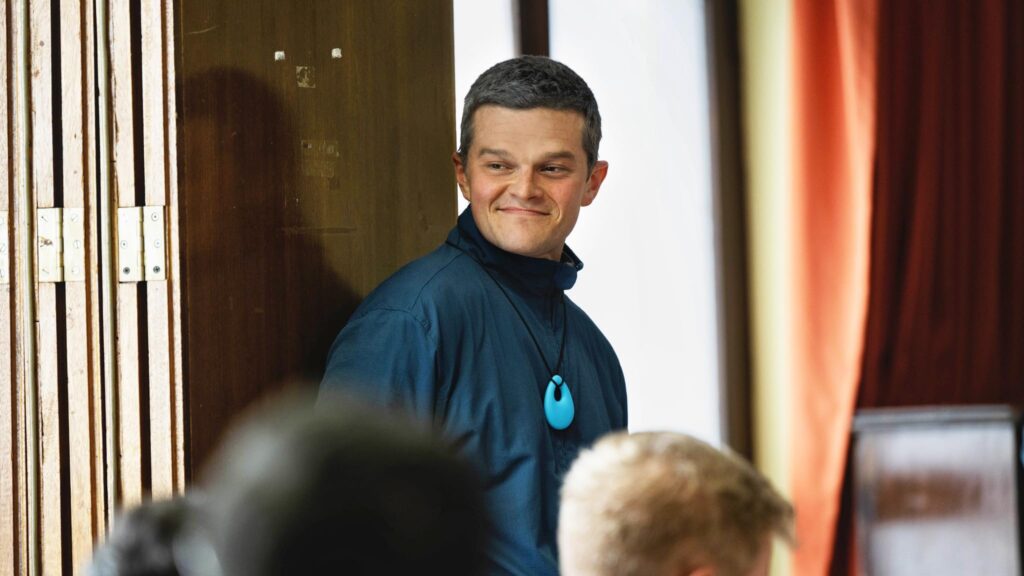
I Swear is ultimately a film about acceptance—not just society accepting John, but John accepting himself. The title refers to both his involuntary swearing and his determination to be heard. By the end, he’s not cured—there is no cure for Tourette’s—but he is whole, living a life of purpose and love despite a condition that once threatened to isolate him forever.
Witness the journey—I Swear is in theaters now. See Robert Aramayo’s knockout performance and discover why this small Scottish story is resonating with audiences worldwide.
Also Read: Jason Statham’s ‘Mutiny’ Poster Promises the Same Reliable Mayhem We Crave