

Christopher Nolan built a 400-pound IMAX blimp to shoot The Odyssey entirely on film, and Matt Damon had to act inside it.
Nolan IMAX Odyssey production is the kind of technical madness that only happens when a filmmaker has enough clout to demand the impossible and enough talent to actually achieve it. Christopher Nolan, never satisfied with merely shooting some scenes in IMAX like a reasonable person, decided to make The Odyssey the first narrative feature shot entirely on IMAX 70mm film cameras. This required inventing new equipment, building a 400-pound soundproof housing, and using mirrors to capture intimate dialogue scenes. Normal directors worry about getting coverage. Nolan worries about whether the laws of physics will cooperate.
The problem with IMAX film cameras has always been noise. They’re loud. Like, “drown out actors whispering” loud. For action sequences—the Joker’s bank heist in The Dark Knight, the plane crash in Tenet, the Trinity test in Oppenheimer—this doesn’t matter. You add sound effects and music anyway. But for dialogue scenes? For two actors having a quiet conversation about whether to sail past the island of the sirens? The camera’s mechanical whir becomes a dealbreaker.
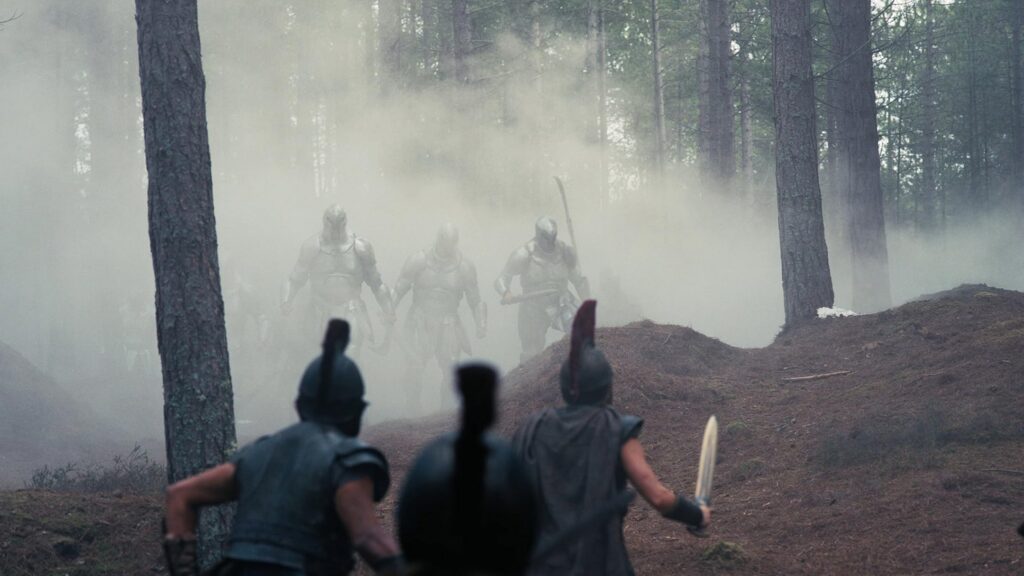
Nolan IMAX Odyssey team solved this by creating what Matt Damon described as a “blimp” the size of a coffin that weighed over 300 pounds. The housing muffled the camera’s sound enough to record usable audio, but it also created a new problem: the camera was now too large for normal eyelines. When two actors talk, they look at each other, not at a massive metal box. So IMAX and cinematographer Hoyte van Hoytema developed a mirror system that let the camera capture reflections of the actors’ faces from angles that maintained natural line-of-sight.
Damon told 60 Minutes that the setup involved “mirrors that were put up so that we could shoot this scene… you’d stand next to the IMAX camera, you’d be looking at a mirror which would reflect back to the camera, and my eyeline would be close to the lens.” It worked beautifully, and the team realized they might actually make it through the entire production shooting exclusively on IMAX.
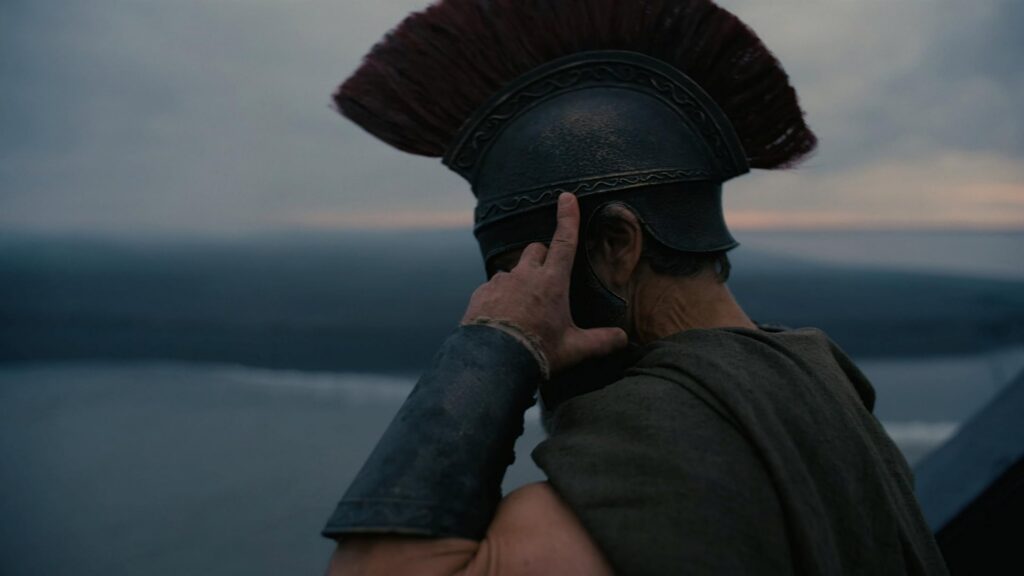
Nolan IMAX Odyssey achievement extends beyond the camera housing. The production used over 2 million feet of 70mm film, which at roughly $1.50 per foot means about $3 million worth of celluloid alone. The film shot for 91 days across six countries—Morocco, Greece, Italy, Iceland, Scotland, and the United States—using a newly developed lighter IMAX camera named the Keighley after the late IMAX pioneer David Keighley. Principal photography wrapped nine days ahead of schedule, because apparently even the Greek gods respect Nolan’s efficiency.
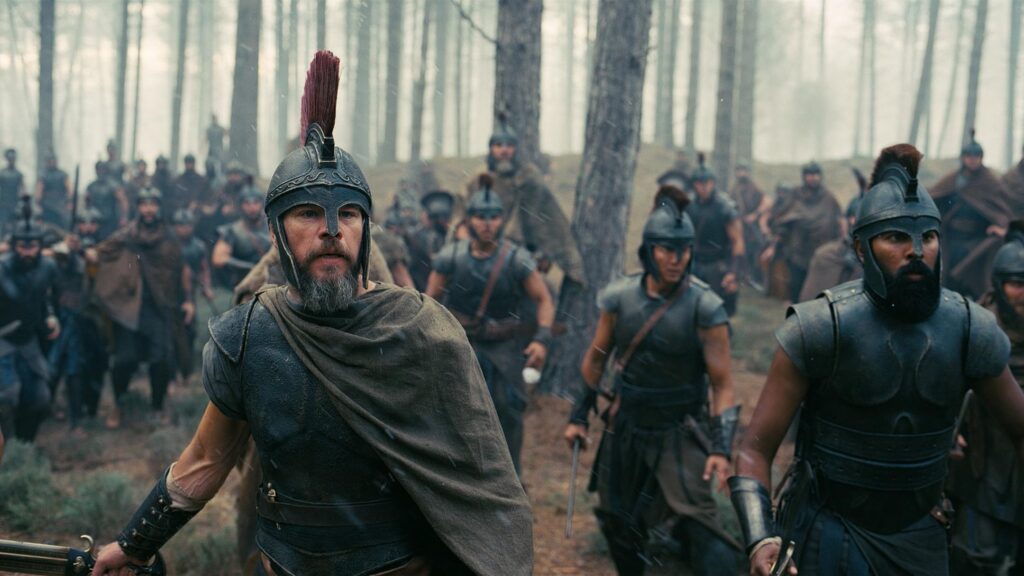
The result is a film that Nolan believes captures “the closest technological analog for how the eye sees.” At the last motion picture film lab in the world—FotoKem in Burbank—technicians hand-splice every cut and color-time every shot using numerical values assigned by a color timer. It’s analog filmmaking at its most obsessive, and The Odyssey arrives July 17, 2026, for audiences who want to see what $250 million worth of ambition looks like projected on 70mm film.
Secure your Nolan IMAX Odyssey tickets now for July 17 and witness the first film shot entirely in the format that changed blockbuster cinema.
Also Read: Penn Directs Cooper in Literary Epic