
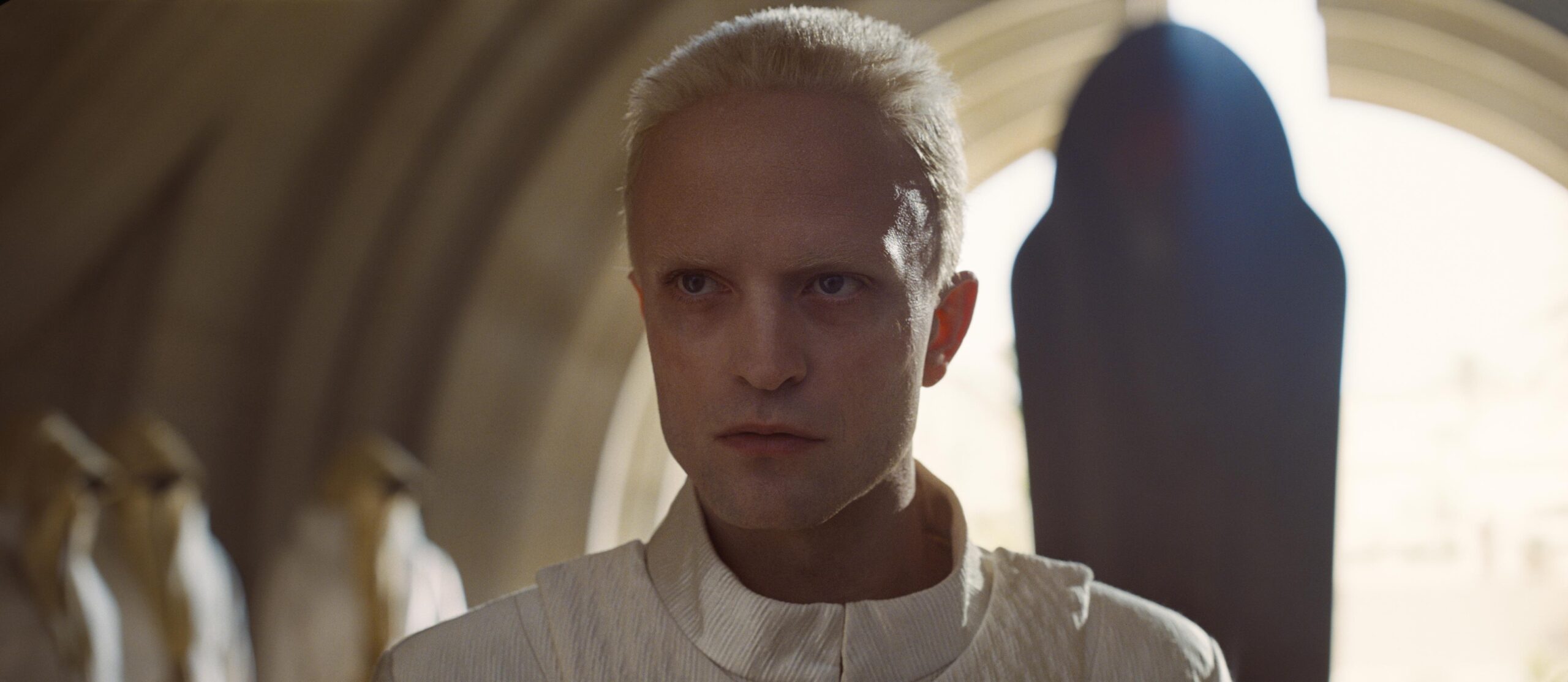
Robert Pattinson has made a career of playing weirdos. From the Batman who looked like he hadn’t slept in years to the clone who kept dying in Mickey 17, he gravitates toward characters who exist slightly outside consensus reality. In Dune Part Three, he may have found his weirdest role yet: Scytale, a shapeshifting Face Dancer whose very existence questions the nature of identity, loyalty, and what it means to be human.
Scytale enters the Dune saga as part of the conspiracy against Paul Atreides, now Emperor and religious figurehead, twelve years after the events of Dune: Part Two. As a Face Dancer created by the Bene Tleilax—a secretive order that practices genetic manipulation in pursuit of immortality—Scytale possesses the ability to change his appearance at will, becoming a perfect replica of anyone he chooses. This makes him the ultimate spy, the ultimate assassin, and the ultimate unreliable narrator.
Pattinson plays Scytale with the slippery charisma he brought to his Twilight vampire and his Caped Crusader, but amplified by the character’s inherent unknowability. When we see Scytale in the trailer, his hair is shock-blonde, his stare is icy, and his allegiances are completely opaque. He describes the character as “unusual” and “interesting,” noting that “you can’t really tell whose side he’s on.” This ambiguity is central to Scytale’s function in the narrative—he is simultaneously villain and victim, antagonist and tragic figure.

The Face Dancer abilities allow Pattinson to play multiple characters within one role. Scytale can appear as anyone, which means Pattinson must adopt different mannerisms, voices, and physicalities depending on who the character is impersonating. It’s a demanding performance that showcases his range while serving the plot’s need for deception and revelation.
Thematically, Scytale represents the critique of charismatic leadership that Frank Herbert embedded in Dune Messiah. While Paul Atreides was presented as a heroic figure in the first novel and film, Messiah complicates this narrative by showing the consequences of his jihad—billions dead, cultures destroyed, a universe reshaped by one man’s vision. Scytale and his fellow conspirators (including the returning Princess Irulan and the scheming Reverend Mother Gaius Helen Mohiam) challenge Paul’s narrative of himself as a reluctant messiah.

Pattinson’s casting is particularly effective because he possesses the same chameleon-like quality as his character. Audiences never quite know what to expect from him, whether he’ll be brooding, manic, or somewhere in between. This unpredictability mirrors Scytale’s nature as a Face Dancer—someone who has no fixed identity, who becomes whatever the situation requires.
The relationship between Scytale and Paul becomes the ideological battleground of the film. Scytale represents the forces of change, evolution, and the rejection of static hero worship. He wants to break the spell that Paul has cast over the universe, to prove that the “Kwisatz Haderach” is not a god but merely a man with exceptional training and good timing. His methods are ruthless—he sends a ghola (a resurrected clone) of Duncan Idaho to infiltrate Paul’s inner circle—but his motivations are understandable: he wants to free humanity from the tyranny of prescience.
Whether Scytale is hero or villain depends entirely on how you view Paul Atreides. If Paul is a tragic hero trying to minimize the damage of his own prophecy, then Scytale is a terrorist. If Paul is a tyrant who has convinced himself he’s benevolent, then Scytale is a freedom fighter. This moral ambiguity is exactly what makes the character fascinating, and exactly why Pattinson—who excels at playing prickly, complicated men—is perfect for the role.
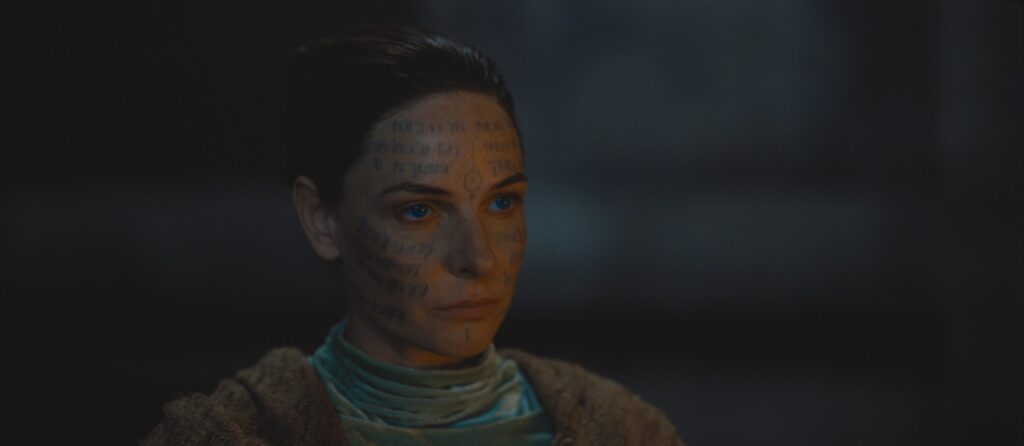
Dune: Part Three arrives December 18, 2026, and promises to be the darkest entry in Denis Villeneuve’s trilogy. With Robert Pattinson’s Scytale leading the charge against Timothée Chalamet’s Paul, we’re in for a battle not just of armies, but of philosophies—and the winner may not be who you expect.
Witness the transformation—see Dune: Part Three in theaters December 18, 2026, and discover whether Robert Pattinson’s Scytale is hero, villain, or something entirely new.
Also Read: Christopher Nolan’s The Dark Knight Masterpiece Film Analysis