
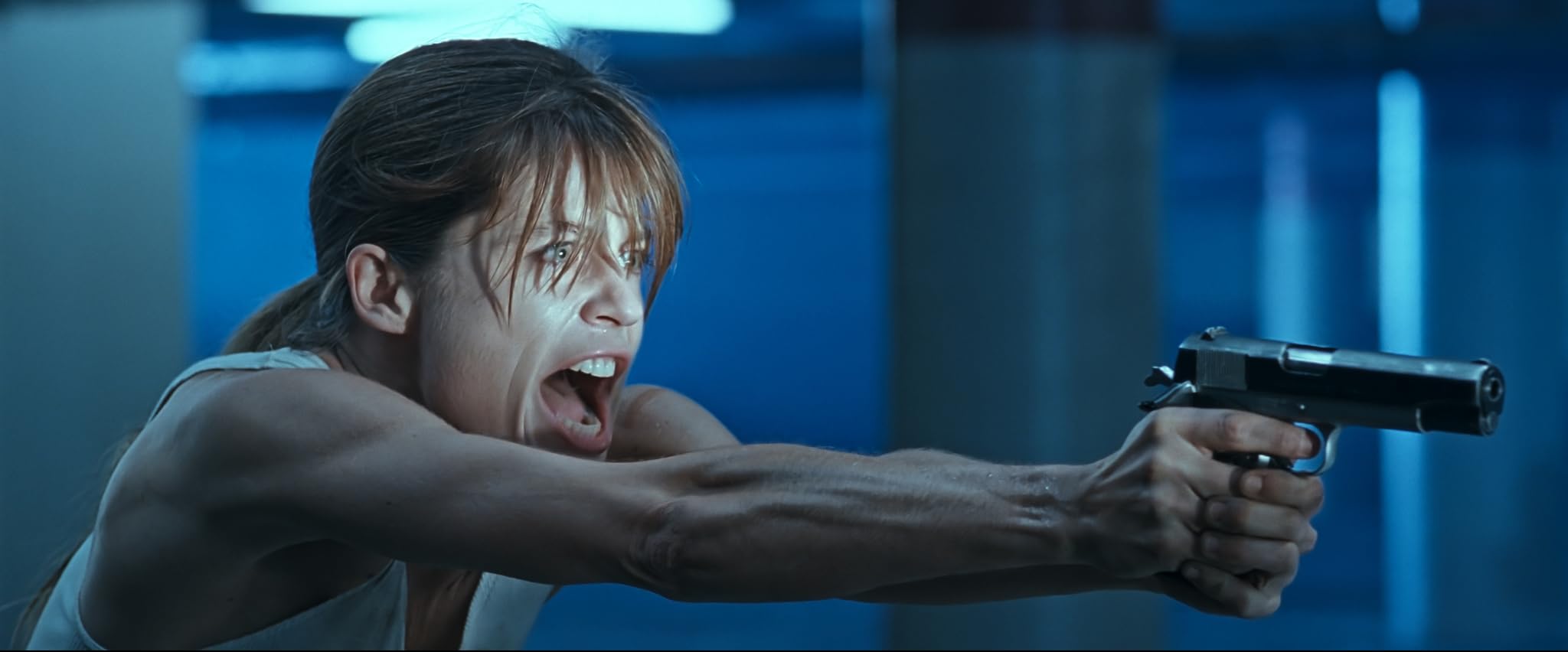
Terminator 2 hospital escape remains the gold standard for action sequences that make you forget to breathe. James Cameron’s 1991 masterpiece gave us many gifts—the liquid metal T-1000, Linda Hamilton’s biceps, Edward Furlong’s unfortunate fashion choices—but this particular scene stands as a masterclass in tension, practical effects, and the art of making a cyborg look genuinely concerned about human safety.
The setup is elegantly simple: Sarah Connor has been institutionalized for trying to blow up Cyberdyne Systems and warning everyone about the impending robot apocalypse. Classic case of “told you so” meets “we’re locking you in a padded room.” The T-1000, disguised as a police officer, arrives at the hospital to kill her. Meanwhile, the T-800—Arnold Schwarzenegger’s reprogrammed protector—shows up to rescue her. What follows is approximately ten minutes of cinematic perfection that balances horror, action, and oddly touching character moments.

What makes Terminator 2 hospital escape so effective is the pacing. Cameron doesn’t rush the reveal. We see Sarah’s institutionalized routine, her therapy sessions, her desperate attempts to convince doctors that she isn’t crazy. The audience knows she’s right, which creates excruciating dramatic irony. When the T-1000 walks through the security checkpoint, the tension ratchets up not because we don’t know what’s coming, but because we absolutely do and Sarah doesn’t yet.
The moment Sarah sees the T-1000 coming down the hallway—that split second of pure terror before she bolts—is acting at its finest. Linda Hamilton went from damsel in distress in the first film to action icon in the second, and this scene is where that transformation crystallizes. She’s not waiting to be saved anymore. She’s running, fighting, improvising weapons from medical equipment like a woman who has been preparing for this exact moment for years.

Then Arnold crashes through. The T-800’s entrance—shooting the T-1000, grabbing Sarah, and escaping with John—is the kind of hero moment that defined 90s action cinema. But Cameron subverts expectations by making the rescue almost as terrifying as the threat. Sarah doesn’t trust this machine. She fought one just like it. Her PTSD is palpable, and the film respects her trauma rather than brushing it aside for convenience.
The practical effects hold up three decades later. The T-1000’s morphing abilities, achieved through groundbreaking CGI and practical puppetry, still look more convincing than most modern digital effects. The hospital set becomes a playground for destruction—bulletproof glass shattering, walls exploding, elevators dropping. Every stunt feels earned because the characters have earned the right to survive.

Terminator 2 hospital escape also works because it understands stakes. John Connor isn’t just a macguffin; he’s a kid who has grown up with a mother who seems insane and now has to accept that she was right all along. His relationship with the T-800 begins here, that weird surrogate father dynamic that gives the film its emotional core. “Come with me if you want to live” isn’t just a catchphrase; it’s a promise that this machine keeps even when logic says it shouldn’t.
Thirty-four years later, action movies still haven’t topped this sequence. They’ve had bigger budgets, better technology, and more explosions, but they rarely have the same understanding of character, stakes, and pacing. Terminator 2 hospital escape isn’t just a great scene; it’s a reminder of what happens when a director cares as much about the people as the pyrotechnics.
Rewatch the classic—stream Terminator 2: Judgment Day and experience the hospital escape that defined a generation of action cinema.
Also Read: Minions & Monsters Poster Is Pure Chaos