
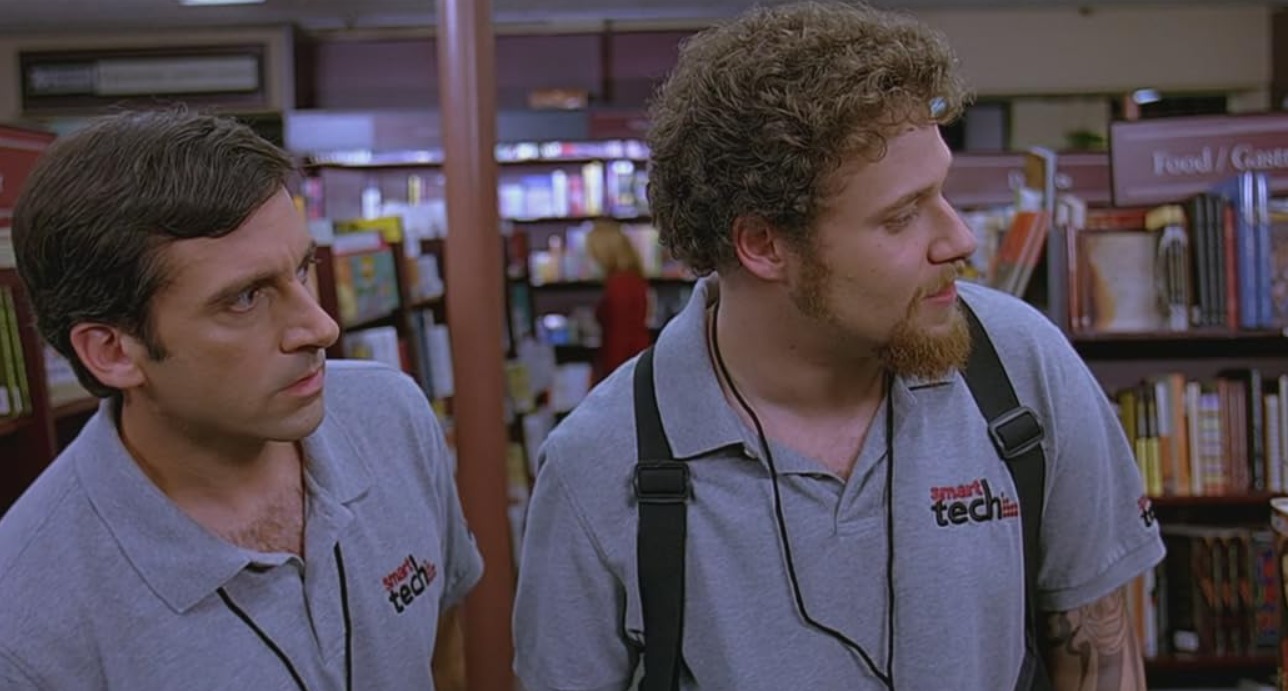
The poker scene in The 40-Year-Old Virgin is more than an awkward comedy moment. It is the idea that helped create the entire movie. Steve Carell first developed the setup as a sketch while performing with the Chicago improv group Second City, where a man struggles to keep up as his friends trade stories about their sexual experiences. The joke eventually became the foundation for Judd Apatow’s 2005 comedy.

In the film, Carell plays Andy Stitzer, a gentle electronics-store employee whose coworkers discover that he has never had sex. The revelation happens after a poker night turns into a competition over who has the wildest story. Andy tries to join the conversation, but his invented details make it obvious that he has no experience to draw from. The scene works because the other men are not trying to expose him at first. They are simply talking, and Andy gets caught trying to fit in.
Carell had performed versions of the sketch during the improv portion of Second City shows. In an interview with Terry Gross, he explained that the poker setup gave him a place to experiment with a character who did not understand the language his friends were speaking. The audience could see the gap before the character admitted it, which made the embarrassment funny without requiring Andy to become cruel or ridiculous.
Judd Apatow heard the idea after working with Carell on Anchorman: The Legend of Ron Burgundy, where Carell played Brick Tamland. Apatow was impressed by Carell’s improvisational comedy and asked whether he had an idea for a film. Carell pitched the poker sketch, and the two developed it into a feature screenplay. The result gave Carell his first major leading film role and helped establish Apatow as a director of modern studio comedies.
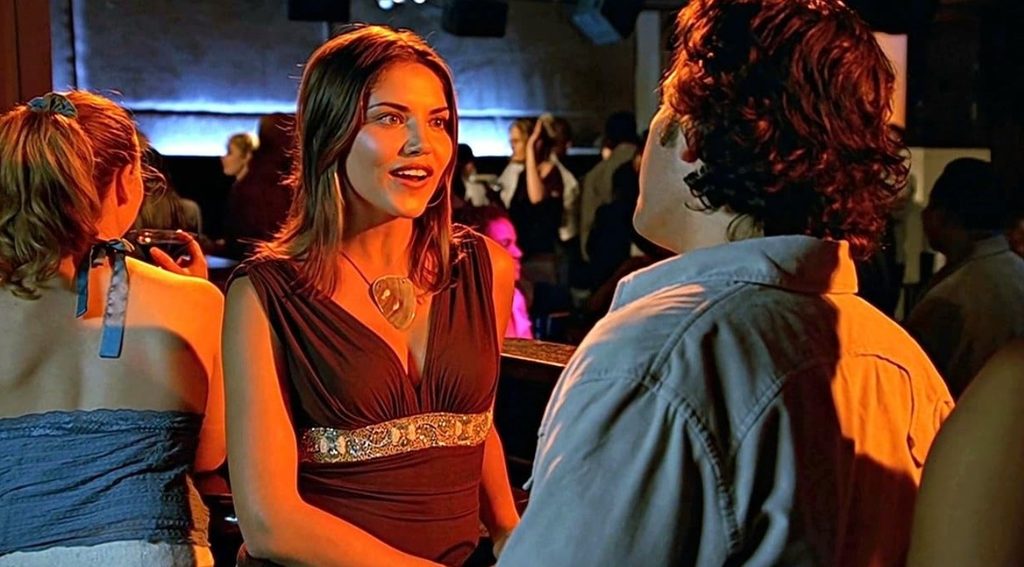
The film’s success was not just a matter of one good premise. The 40-Year-Old Virgin earned about $177 million worldwide against a reported production budget of $26 million. Universal Pictures released it in August 2005, and its success helped open the door for a wave of character-driven comedies built around awkward adults, friends and relationship problems.
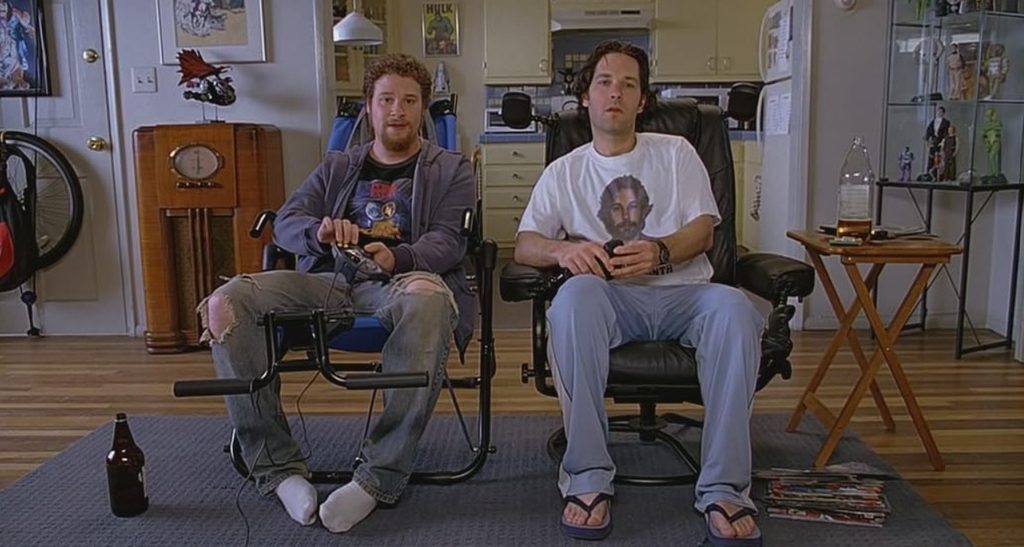
The supporting cast is a major part of that appeal. Paul Rudd plays David, Romany Malco plays Jay and Seth Rogen plays Cal, the coworkers who attempt to help Andy navigate dating. Catherine Keener plays Trish, the woman he meets and begins to care about. Jane Lynch and Elizabeth Banks also appear, adding to a cast that became a familiar group of comedy performers in the years that followed.
Apatow’s approach also left room for improvisation. The screenplay provided the scene’s structure, but performers could test lines and reactions during rehearsals and filming. That mix helped the movie feel like a group of friends making each other laugh rather than actors waiting for the next scripted punchline.
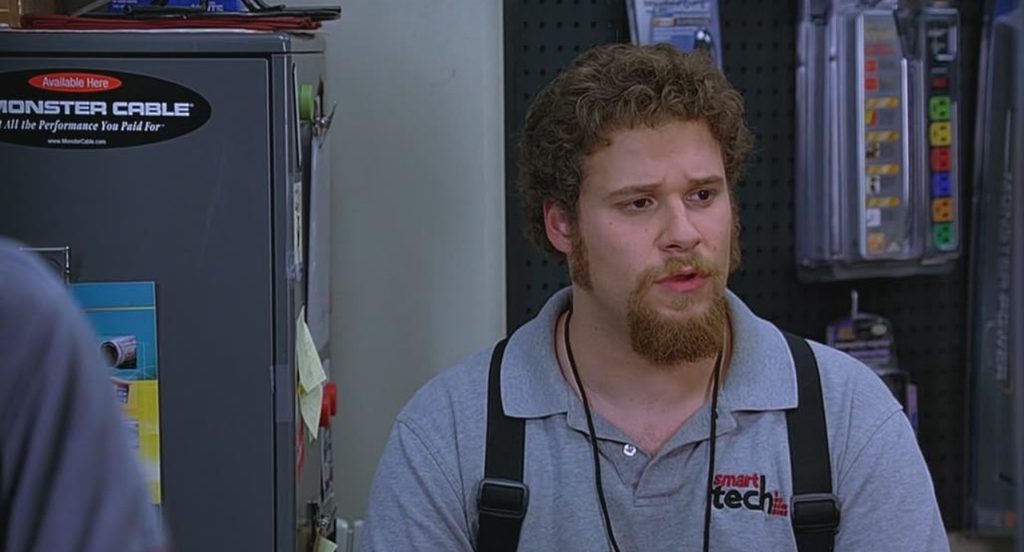
The poker scene is still memorable because it introduces Andy’s problem through behavior, not an explanation. It also shows how a small improv idea can become the central engine of a successful studio comedy. Sometimes a whole movie really does begin with one person failing to tell a convincing story at a poker table.
Also Read: Interstellar: 12 Years Equal 103 Minutes on Miller’s Planet