
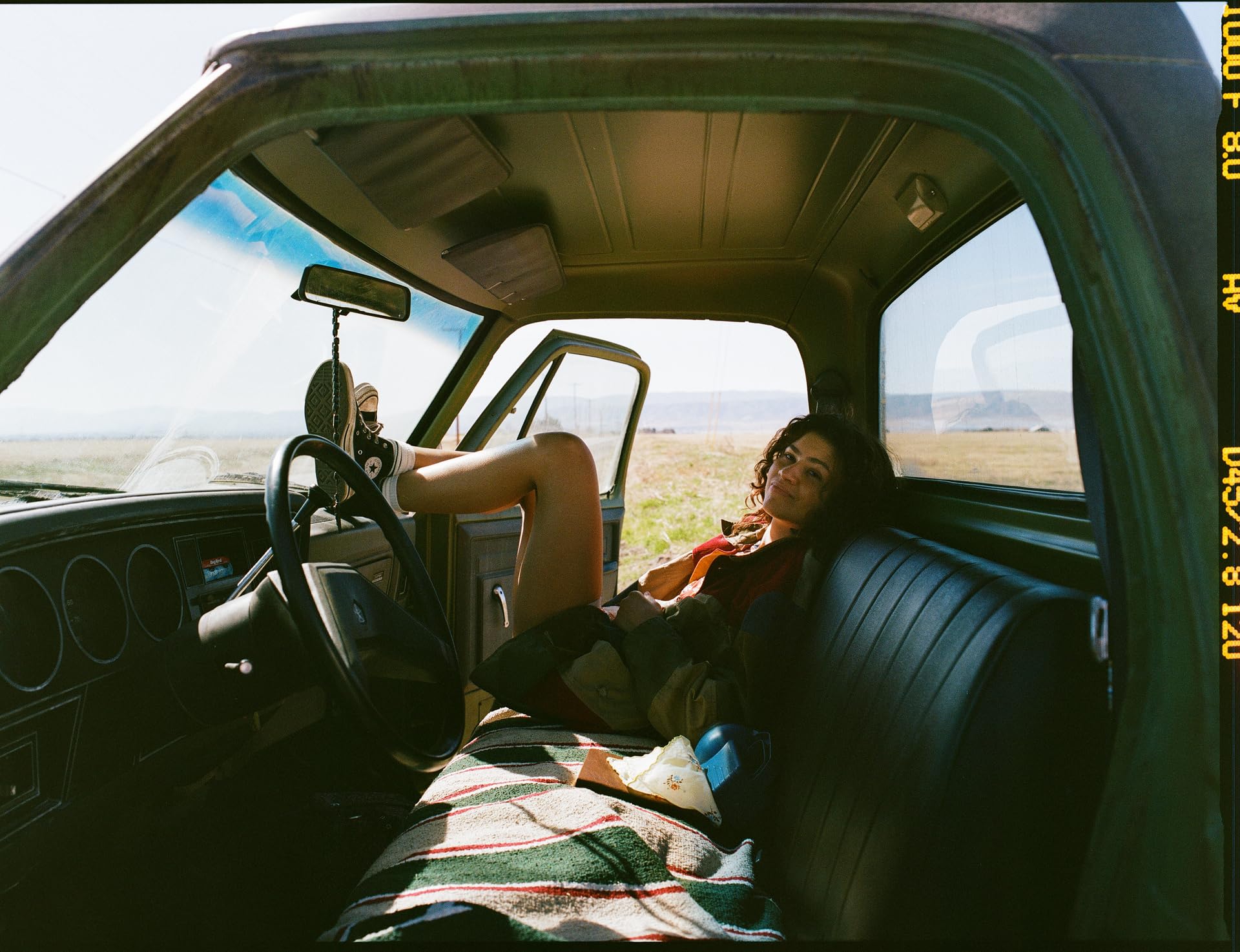
Sam Levinson understands that you only get one chance to make a first impression, and he has apparently decided that his impression should be “what if we gave the audience a panic attack before the opening credits?” The first five minutes of Euphoria Season 3 are simultaneously the best thing the show has ever done and a warning sign that we’re in for a wild ride— emphasis on “wild,” with a side of “deeply concerning.”
We open on Rue Bennett, five years older but apparently no wiser, driving a beat-up car across the Mexican desert with Christopher Cross’s “Ride Like the Wind” blasting on the radio. This is already a choice. The song, with its lyrics about making it to the border of Mexico, is either the most on-the-nose musical selection in television history or a deliberate joke about how Rue’s life has become a literal interpretation of 80s yacht rock. Given that Levinson’s sense of humor has always been… particular, it’s probably both.
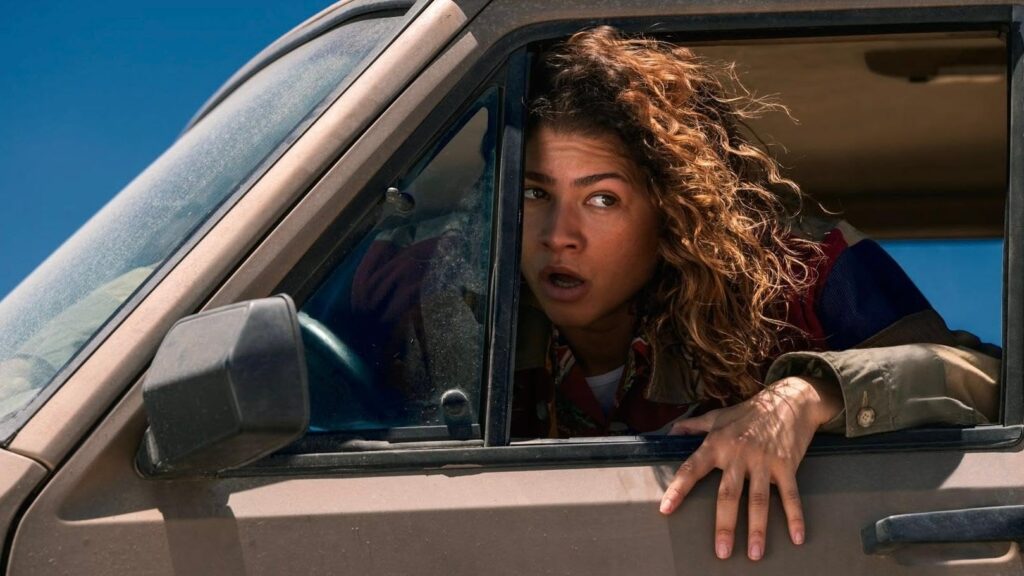
The scene unfolds with minimal dialogue and maximum tension. Rue isn’t just taking a road trip; she’s working as a drug mule, ferrying fentanyl across the border to pay off debts to Laurie, the deadpan drug lord from Season 2 who made Martha Kelly a household name among people who watch disturbing television. The visual language is pure Euphoria—gorgeous cinematography by Marcell Rév, sweeping desert vistas that would look at home in a Western, and Zendaya’s face doing approximately fourteen different emotions per minute.
What elevates this from standard crime drama territory is the absurdist humor that Levinson wedges between moments of genuine peril. Rue drives her car up a jerry-rigged ramp and over the border wall, a sequence that plays like silent comedy by way of Breaking Bad. The vehicle gets suspended mid-air in a moment that serves no narrative purpose except to look incredible—which, honestly, is reason enough. This is Euphoria’s sweet spot: the intersection of genuine artistic ambition and “because we can” showmanship.
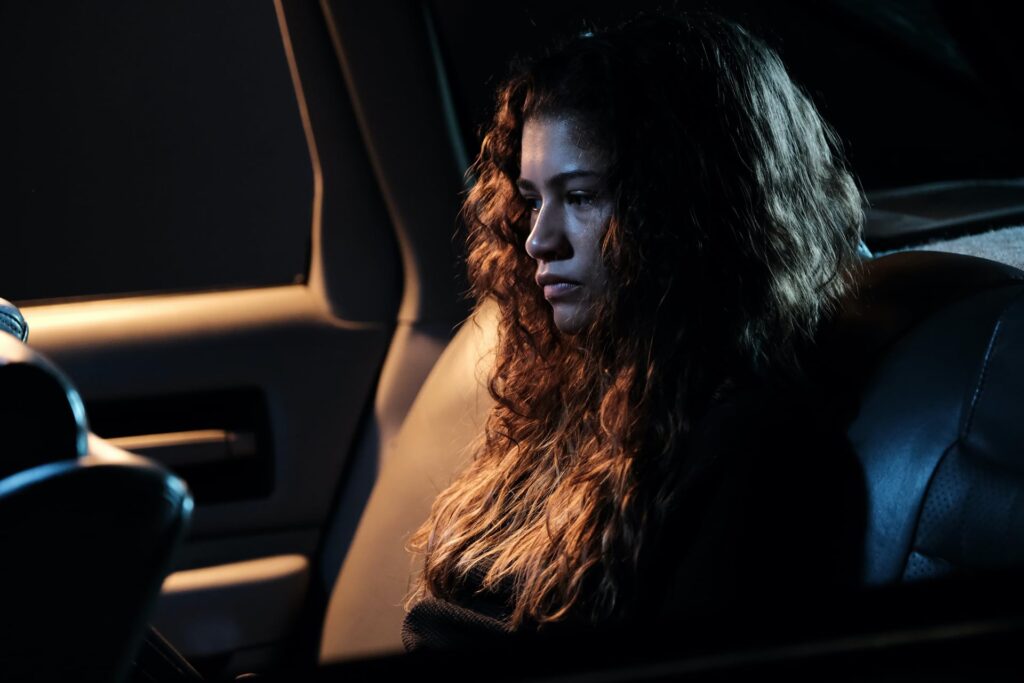
The scene establishes Rue’s new reality without heavy exposition. We learn through action, not dialogue, that she has become a professional smuggler, that she has done this run multiple times, that she has developed a system for swallowing drug-filled balloons and retrieving them on the other side. The sequence where she and Faye—Chloe Cherry’s character, now a series regular—choke down golf ball-sized bags of fentanyl is shot from above at what critics have diplomatically called a “lofty angle,” creating a visual that is simultaneously grotesque and weirdly artistic.
By the time Rue makes it back across the border, we understand everything we need to know about where she stands: still indebted, still using, still somehow finding moments of joy in the wreckage of her life. The Christopher Cross song returns as she drives, wind in her hair, temporarily free. It’s a moment of pure cinema that reminds you why Euphoria became a phenomenon in the first place—when it stops trying to shock you and just tells a story about a girl who can’t stop running from herself.
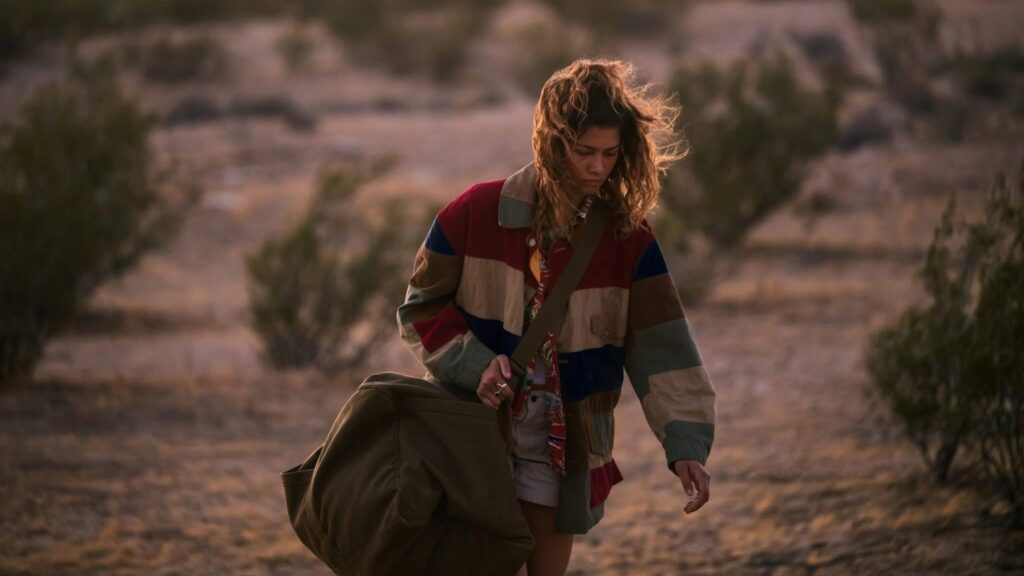
The opening also establishes the season’s new genre mashup. This isn’t high school drama anymore; it’s a neo-Western crime thriller with occasional detours into toilet humor. Rue isn’t a teenager experimenting with drugs; she’s a career criminal with a five-year resume. The stakes have shifted from “will she graduate” to “will she survive,” and the show treats this evolution with the gravity it deserves—right up until it undercuts that gravity with a fart joke.
Experience the anxiety—stream Euphoria Season 3 on HBO and watch the first five minutes that had everyone talking.
Also Read: Sydney Sweeney Returns to ‘Euphoria’ Wearing a Dog Costume