
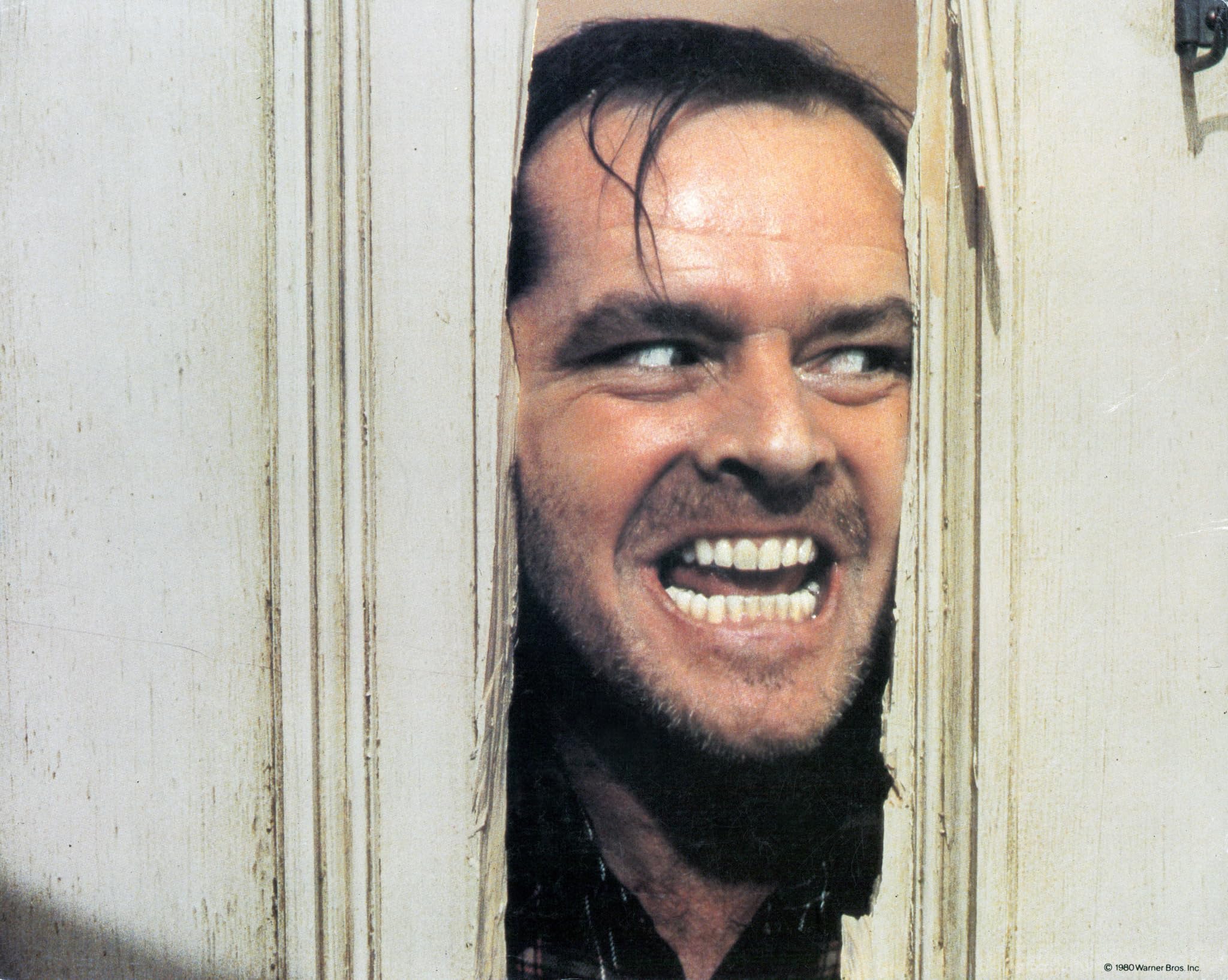
The Shining horror is forty-six years old and still manages to make me check behind my shower curtain, which is honestly rude of it. Stanley Kubrick took a Stephen King novel about a haunted hotel and turned it into something far more disturbing—a meditation on isolation, masculinity, and the terror of your own family. Jack Nicholson’s face is permanently etched into my brain, and I didn’t even do anything to deserve this.
What makes The Shining horror timeless is the slow burn. Kubrick doesn’t rush. He lets the Overlook Hotel breathe, showing you every corridor, every patterned carpet, every door that probably shouldn’t be opened. The pacing is deliberate to the point of madness, which mirrors Jack Torrance’s own descent. By the time he’s chasing Danny through the hedge maze, you’ve been in this hotel so long that the walls feel like they’re closing in on you too.
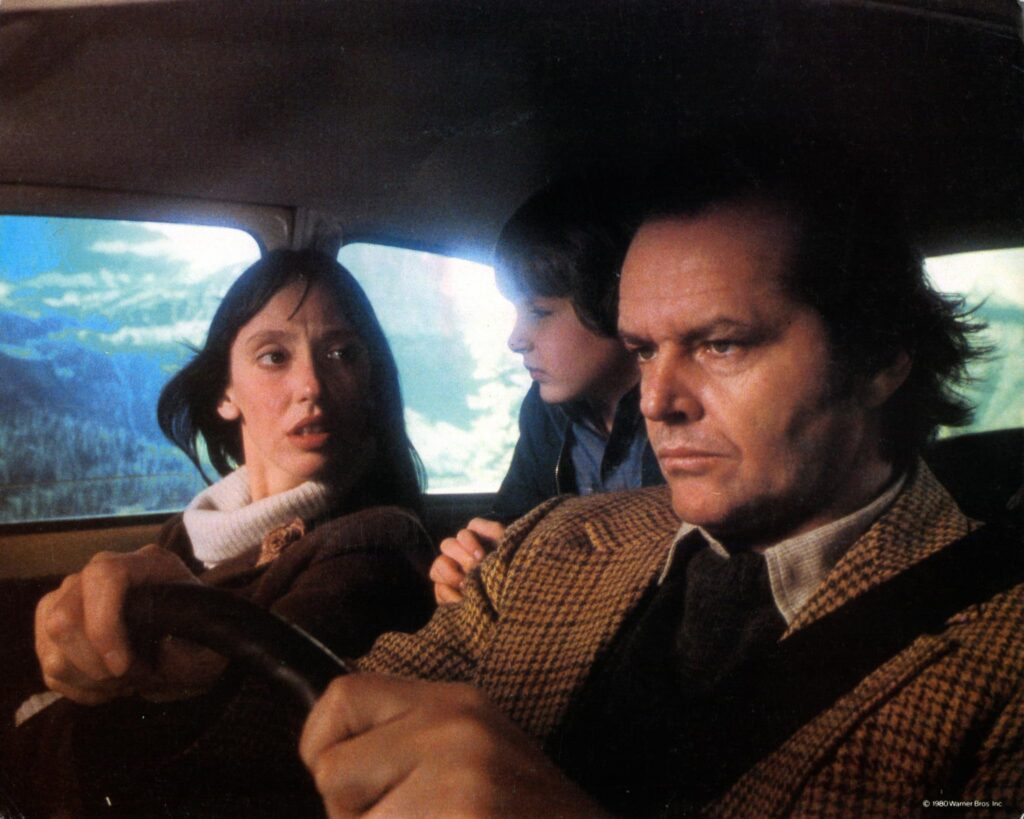
The technical craft is ridiculous. The Steadicam shots following Danny on his tricycle—those low angles, the wheels squeaking on carpet then hardwood then carpet again—create a rhythm that becomes hypnotic. The Shining horror builds through repetition and variation, like a symphony where every note is slightly wrong. The blood pouring from the elevator, the twins in the hallway, the woman in room 237: each image is iconic because Kubrick shot them with the care of a Renaissance painter depicting something unholy.
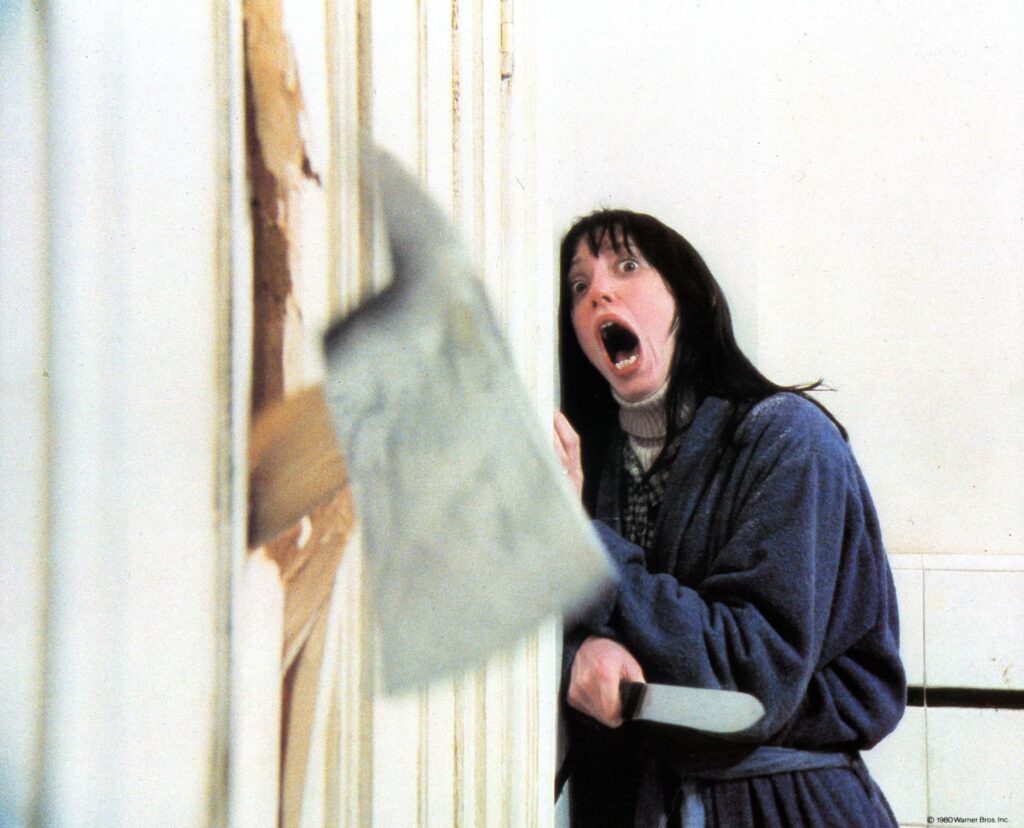
Jack Nicholson’s performance is the centerpiece, obviously. He doesn’t play Jack as a good man corrupted; he plays him as a man who was always one bad day away from murder. The “Here’s Johnny!” moment is funny until it’s not, until you remember this is a father trying to kill his son with an axe. The Shining horror works because the supernatural elements are almost unnecessary—Jack would have been terrifying without the ghosts, just a drunk with rage issues and a typewriter.
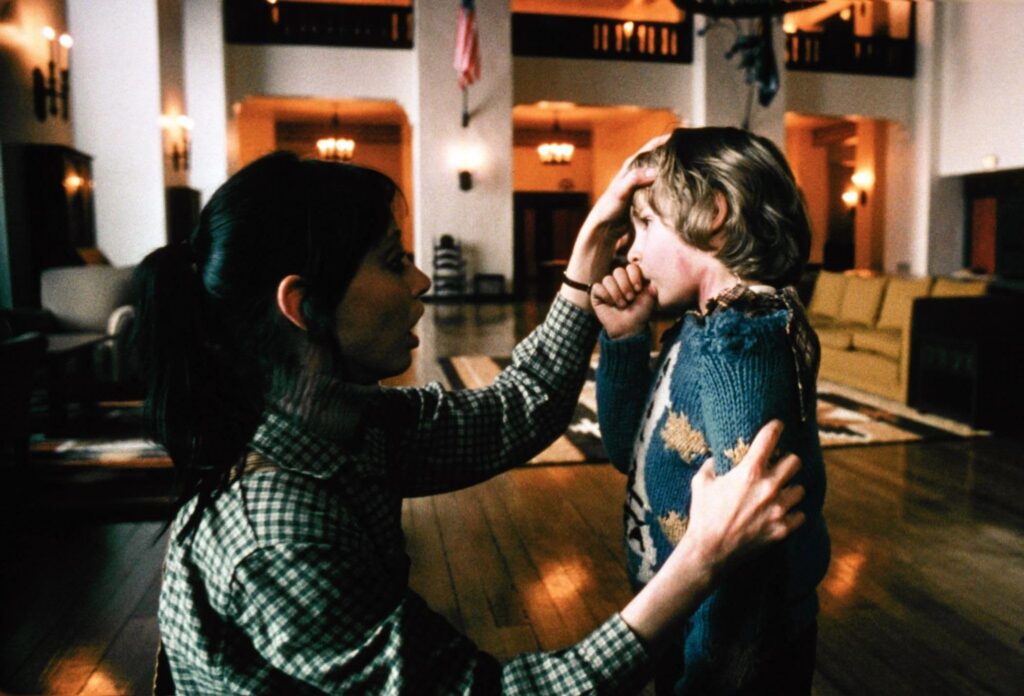
Shelley Duvall deserves more credit than she gets. Playing Wendy as a woman slowly realizing her husband is a monster required her to spend months on set being emotionally tortured by Kubrick, which wasn’t acting so much as method abuse. Her terror is real, and that makes The Shining horror hit harder than any special effect.
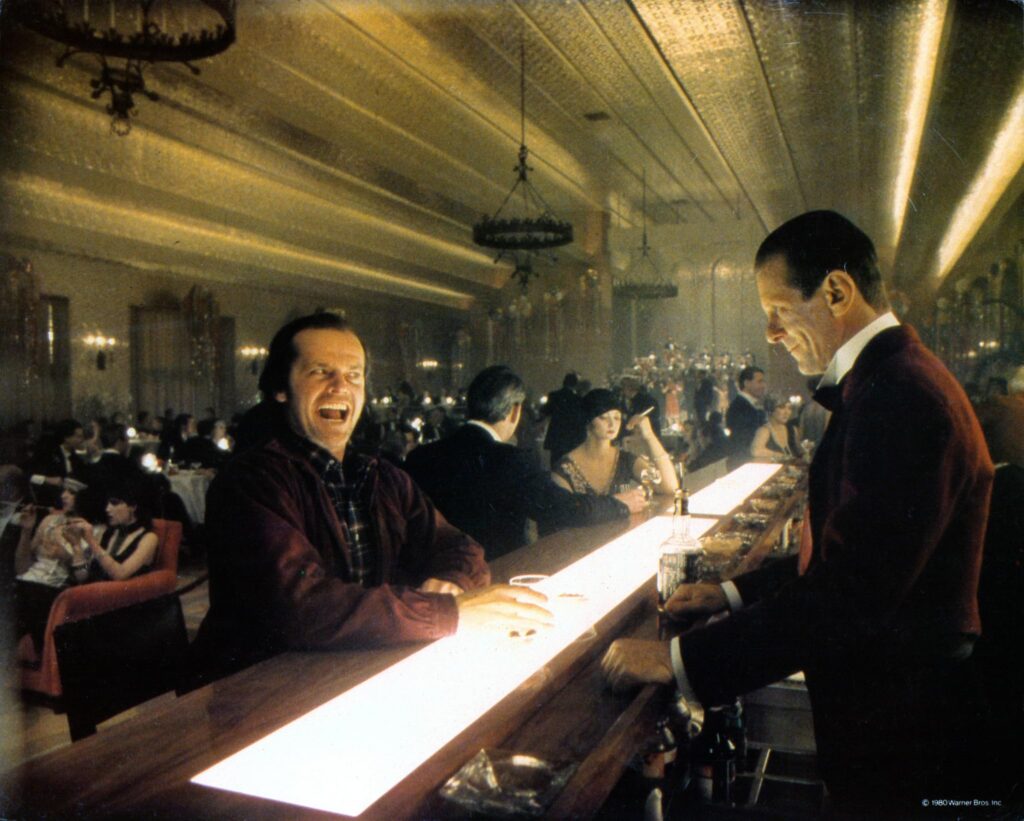
The ending remains perfect. The photograph of Jack at the 1921 Overlook party suggests he’s always been part of the hotel, trapped in a loop of violence and hospitality. The Shining horror isn’t about a haunted building; it’s about haunted people, and some hauntings never end.
Check into The Shining horror on streaming and see why Kubrick’s masterpiece still checks into your nightmares.
Also Read: Matrix Rave Scene Rules