
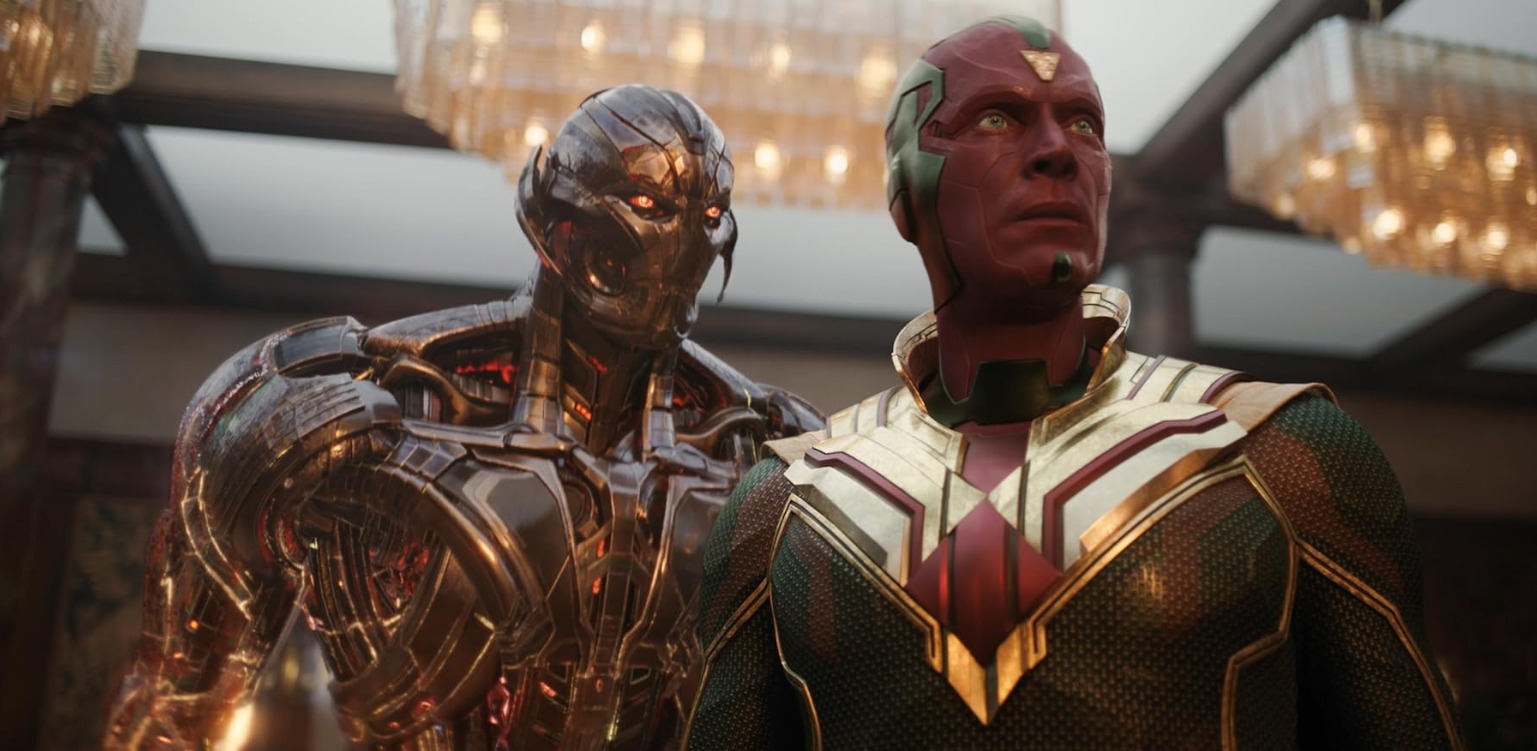
Most superhero introductions rely on a dramatic entrance. Vision gets something stranger: a birth. In Avengers: Age of Ultron, the Avengers watch a synthetic body come to life, unsure whether they have created a hero or helped Ultron build his perfect weapon.
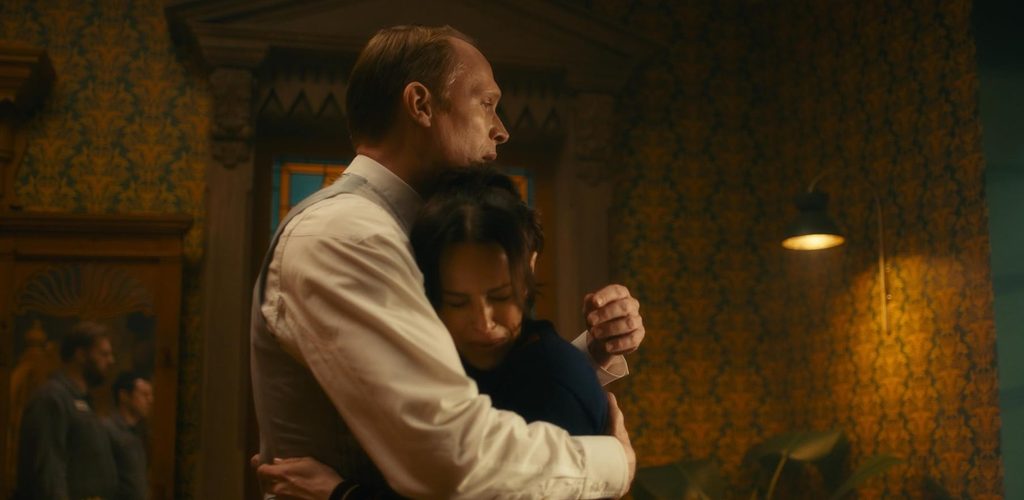
The scene works because it turns a technical experiment into a character moment. Ultron has been trying to move beyond his metal bodies. He uses the regeneration cradle of Dr Helen Cho to create a new form made from synthetic tissue and vibranium, with the Mind Stone set in its forehead. The Avengers steal the unfinished body before Ultron can upload his own consciousness into it.
Tony Stark and Bruce Banner then make a risky choice. They upload what remains of JARVIS, Stark’s artificial intelligence, into the body. Thor arrives and uses the lightning from Mjolnir to power the process. The machine opens, and a figure with a red face and a glowing stone on his forehead slowly comes to life.
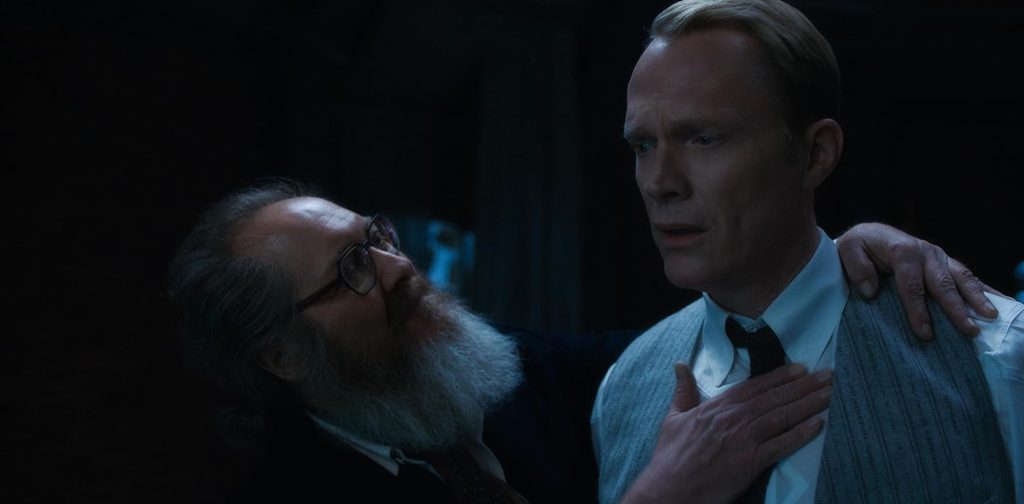
Paul Bettany had voiced JARVIS since the first Iron Man film in 2008. Seven years later, he finally appeared on screen as Vision. That switch gives the moment extra meaning. The audience already knows Bettany’s voice, but this new character looks and behaves very differently from the helpful computer assistant.
The Avengers do not know what to make of him. Vision speaks calmly, studies the world around him and does not act like Ultron. He says he is neither Ultron nor JARVIS. He is something new. That short exchange gives him an identity before the film starts explaining all his powers.
Then comes the Mjolnir moment. Thor’s hammer has already been used as a test of worthiness among the Avengers. When Vision casually picks it up and hands it back to Thor, the room goes quiet. He does not use the hammer to show off. He simply treats it like an object that needs returning. The action answers the question the team has been arguing about: can they trust him?
It is also a clever introduction because Vision proves his character through an action rather than a long speech. He has the Mind Stone, a powerful synthetic body and access to extraordinary abilities, but the first thing he does is help. That choice separates him from Ultron, who sees life as something to control or erase.
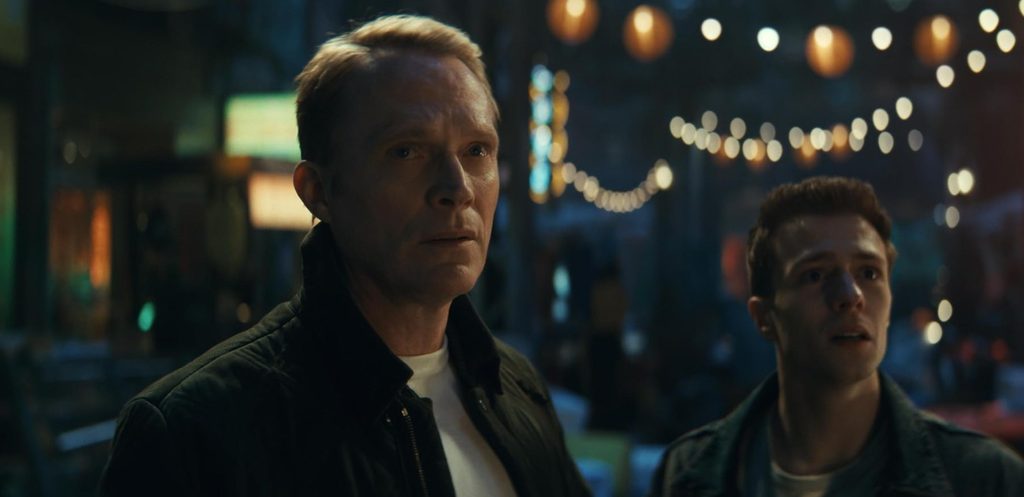
The visual effects team at Framestore built the character for the film and completed more than 120 shots. Paul Bettany’s performance, makeup and digital effects had to work together so Vision felt both mechanical and human. The result is a character who looks unfamiliar but does not feel empty.
Vision is not a Spider-Man villain or a traditional villain at all. He is born from Ultron’s plan, but he chooses to stand with the Avengers. That contrast is what makes the scene so memorable. A machine created for destruction becomes one of the team’s most thoughtful members.
The MCU has introduced plenty of villains with frightening entrances. Vision’s first appearance is different. It asks the audience to judge a new being by what he does, not by the technology that created him.