

There is a special kind of irony reserved for a movie that earns $1.4 billion at the global box office and still gets labeled a disappointment. In any rational universe, that number would trigger celebrations, bonuses, and maybe a parade. But in the upside-down economics of modern Hollywood, Avatar: Fire and Ash—the third installment in James Cameron’s epic sci-fi saga—has become a cautionary tale about what happens when your break-even point requires you to literally rewrite the laws of physics.

The math is brutal and borderline absurd. Disney spent over $500 million to produce and market Fire and Ash, a figure so astronomical that it requires its own gravitational field. Then you factor in that theatrical exhibitors take roughly half of all box office receipts, and suddenly that $1.43 billion worldwide haul starts looking less like a jackpot and more like a participation trophy. Cameron himself has described his Avatar films as the “worst business case in movie history,” noting that their break-even points tend to hover around $1.5 billion. By his own admission, Fire and Ash hasn’t broken even yet, though it “will recoup costs” eventually through Disney+ and other revenue streams.
This is what happens when you build a franchise on technological innovation rather than storytelling momentum. The first Avatar revolutionized cinema with its 3D visuals and motion capture technology, earning $2.9 billion and becoming the highest-grossing film of all time. The Way of Water repeated the trick thirteen years later, earning $2.2 billion by promising underwater visuals that had never been seen before. But Fire and Ash arrived just three years after its predecessor—the shortest gap in the franchise’s history—and audiences seem to have reached saturation point. The film earned $390 million domestically compared to The Way of Water’s $688 million, a drop-off that suggests the novelty has worn off.
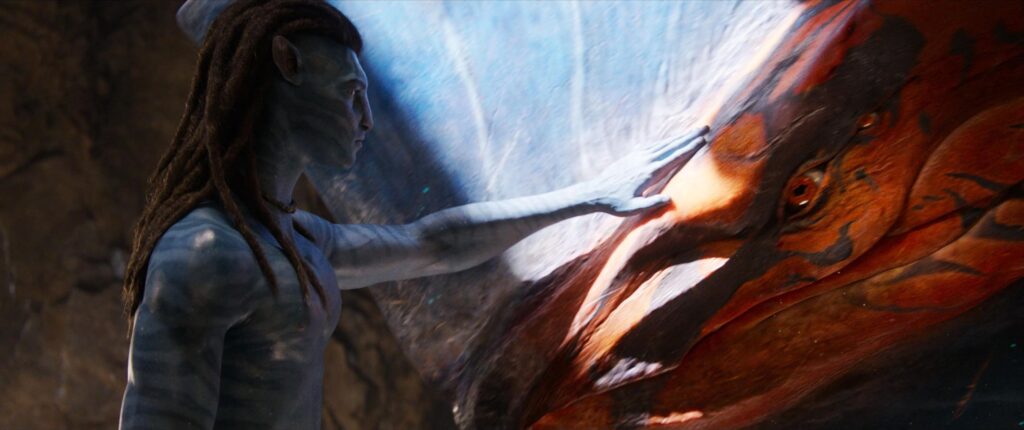
The problems go deeper than scheduling. At 197 minutes, Fire and Ash asks audiences to commit over three hours to a story that critics and audiences found increasingly repetitive. The technological leaps that defined the first two films—the 3D that made you duck, the underwater motion capture that made you believe in CG whales—weren’t as revolutionary this time around. When you’ve already seen Pandora, the wonder starts to feel like a rerun.
Disney now faces an existential question about the franchise’s future. They had committed to two more sequels, scheduled for 2029 and 2031, but there’s no contractual obligation to proceed if the economics don’t make sense. Cameron will be 75 by the time Avatar 4 hits theaters, assuming it ever does. The studio is reportedly pushing for “cheaper and shorter” sequels, which is Hollywood code for “please make this profitable before we all get fired.”

The tragedy is that Fire and Ash isn’t a bad movie—it’s a victim of its own success. Cameron created a standard so high that merely being good isn’t good enough. When your business model requires you to earn more than the GDP of some small countries to break even, you’ve built a machine that runs on impossible expectations. The question isn’t whether Avatar can continue; it’s whether it should, or whether three films and $4 billion in global earnings is enough to call it a victory and move on.
James Cameron has defied expectations before. He made a movie about a boat sinking and earned $2.2 billion. He made a movie about blue aliens and earned $2.9 billion. But even he might not be able to save a franchise that has become too big to succeed.
Dive back into Pandora—stream Avatar: Fire and Ash on Disney+ and decide for yourself if the franchise still has magic left in its tank.
Also Read: The Fight We Never Got to See Because Egos Are the Real Supervillains