
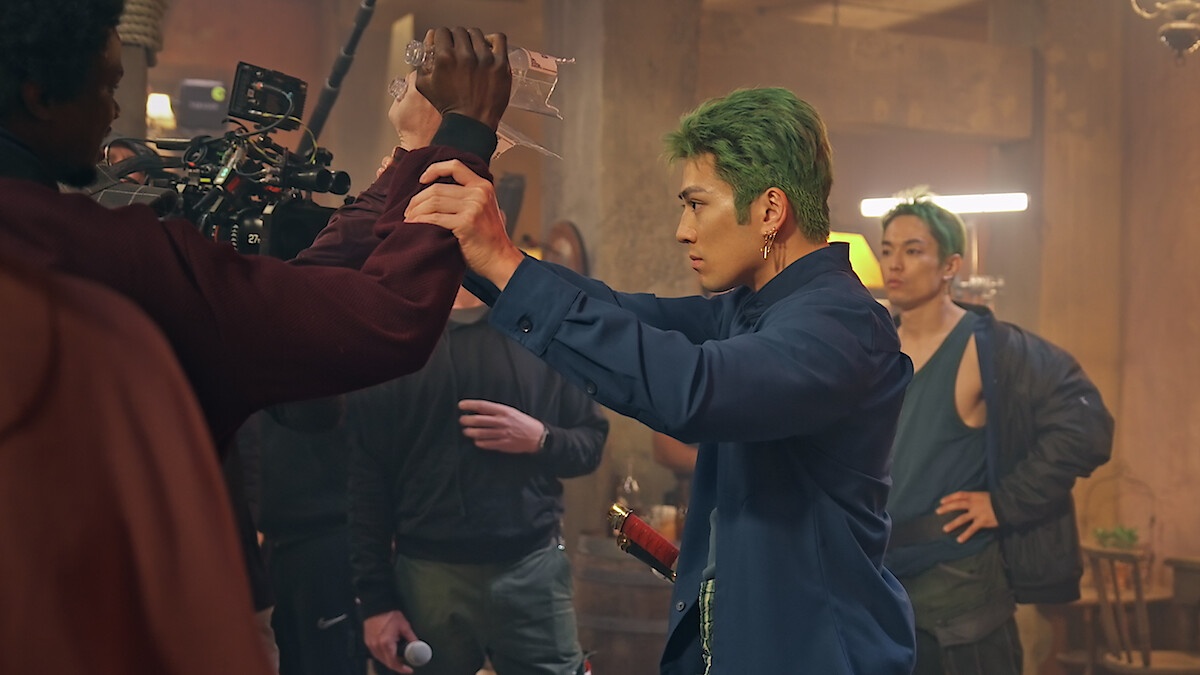
There is a specific type of exhaustion reserved for actors who perform their own stunts, a particular brand of physical misery that comes from pretending to be a superhuman swordsman while actually just being a very tired person in a green wig. The cast of One Piece Season 2 knows this exhaustion intimately, having spent months training, rehearsing, and executing action sequences that make the first season look like a warm-up lap.
The promise from the stunt team was simple: in season two, they’re scaling it up. The same crew that earned an Emmy for Outstanding Stunt Coordination in Season 1 returned with a mandate to go bigger, faster, and more ambitious. Every moment was crafted to feel as bold and boundless as the Grand Line itself, which is marketing speak for “we made the actors do things that should probably be illegal under labor laws.”
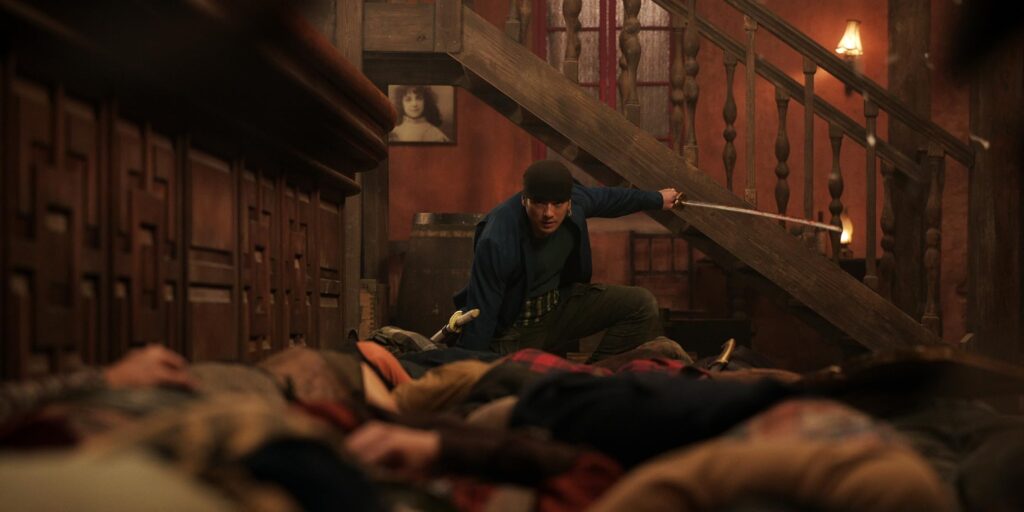
Emily Rudd, who plays Nami, confirmed that the cast performed most of their own stunts, receiving praise from supervising stunt coordinator Franz Spilhaus for their dedication to physical authenticity. This isn’t the kind of show where you can hide behind a stunt double for the wide shots; the camera lingers on faces, which means the faces need to be actually doing the punching, kicking, and sword-swinging.
Taz Skylar, who plays Sanji, continued training long after the first season wrapped, ensuring he had the physicality to perform the various kicks, stunts, and acrobatics required to portray a chef who fights exclusively with his legs. His social media became a chronicle of martial arts progress, documenting the transformation from actor to actual combat-capable performer. Iñaki Godoy, already committed to embodying Luffy’s rubber-man abilities, added gymnastics to his skillset to better sell the character’s impossible flexibility and boundless energy.
Julie Rehwald, who plays Tashigi and had never previously handled a sword, learned from scratch under the tutelage of swordmaster Koji. The production didn’t hire her for existing skills; they hired her for potential and then trained her until she could convincingly cross blades with Zoro. That’s the level of commitment required when your source material is one of the most beloved action franchises in manga history.
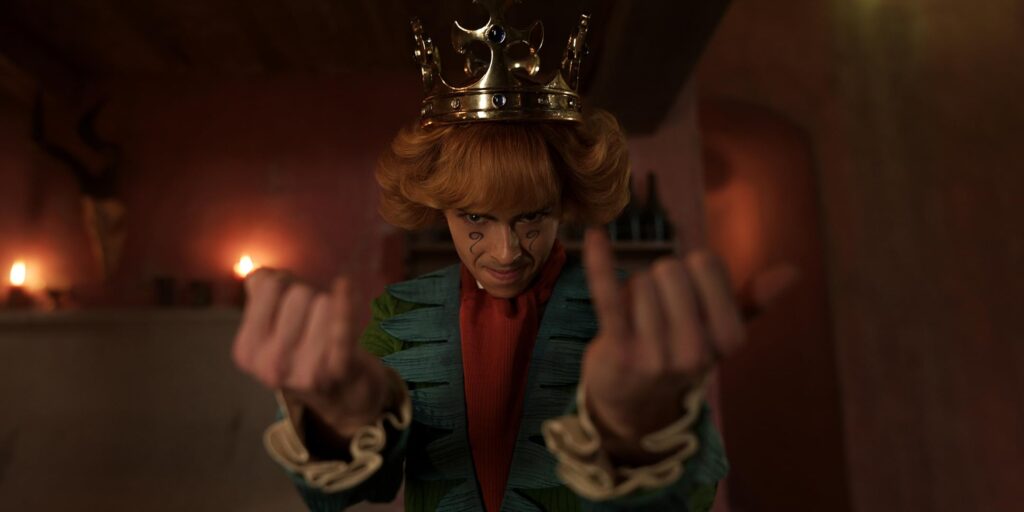
The centerpiece of the season’s stunt work is the Whisky Peak Saloon sequence, which represents the most ambitious fight choreography the show has attempted. Roronoa Zoro, played by Mackenyu, fights his way through 100 Baroque Works agents in a sequence that required an entire month of stage choreography before the stunt doubles even touched the set. The pre-visualization team then tested the sequences, refining the timing and camera angles until every punch and parry landed with maximum impact.
Mackenyu learned the choreography for this 15-minute one-versus-hundred brawl in just six hours, a feat that sounds impossible until you remember that he grew up in the entertainment industry as the son of legendary actor Sonny Chiba. Action is in his blood, but even he admitted the physical demands of Season 2 pushed him to new limits. According to Spilhaus, everything you see in the episode is actually Mackenyu in action—no digital face replacement, no cutaways to stunt performers, just one actor genuinely fighting his way through a small army.
The set itself was designed as a multi-level playground for violence, with Zoro fighting his way up through various layers of the saloon. The choreography included specific attention to Zoro’s habit of counting his opponents, ensuring that every number he calls out corresponds to actual on-screen takedowns. This kind of detail—synchronizing character quirks with action beats—separates competent stunt work from the kind that wins Emmys.
The physical toll on the actors was immense. Jacob Romero, who plays Usopp, apparently got bigger between seasons, possibly as a result of the physical training or possibly just from the stress of carrying the emotional weight of the Straw Hat crew’s cowardly sharpshooter. Either way, the cast emerged from production with new muscles, new scars, and new respect for the unsung heroes of stunt coordination.
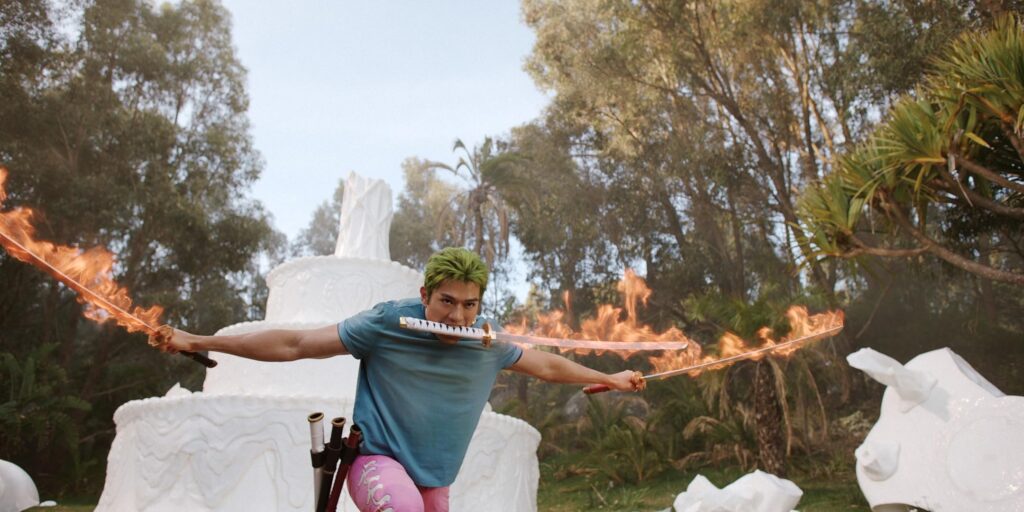
What makes the stunt work in One Piece special is how it serves character. Luffy’s rubber-body physics require a combination of wire work and digital enhancement that still feels physical because Godoy is actually throwing himself around the set. Zoro’s three-sword style demands precise choreography that showcases Mackenyu’s actual martial arts training. Sanji’s leg-based combat requires flexibility and balance that Skylar developed through months of dedicated practice.
The result is action that feels earned rather than manufactured, violence that carries weight because you can see the sweat and bruises on the actors’ faces. In an era of CGI-heavy blockbusters where heroes float weightlessly through digitally rendered destruction, One Piece Season 2 grounds its fantasy in physical reality. The Grand Line may be a place of impossible wonders, but the people sailing it are very real, very tired, and very committed to making you believe in rubber men and pirate kings.
Watch the impossible become possible—stream One Piece: Into the Grand Line Season 2 on Netflix and witness the stunt work that raised the bar for live-action adaptation.
Also Read: The Secret Colors of ‘KPop Demon Hunters’ That You Definitely Missed