
There is a moment in the opening of Star Wars: Episode III—Revenge of the Sith when the camera tilts downward from the twinkling lights of Coruscant’s cityscape to reveal a nightmare of metal and fire. Hundreds of warships are engaged in a broadside battle so massive that the ships themselves look like buildings, colliding and tearing each other apart while tiny starfighters weave through the wreckage like fireflies caught in a hurricane. It has been over twenty years since this sequence first blasted onto screens, and it remains the best CGI space battle ever committed to film. Fight me.
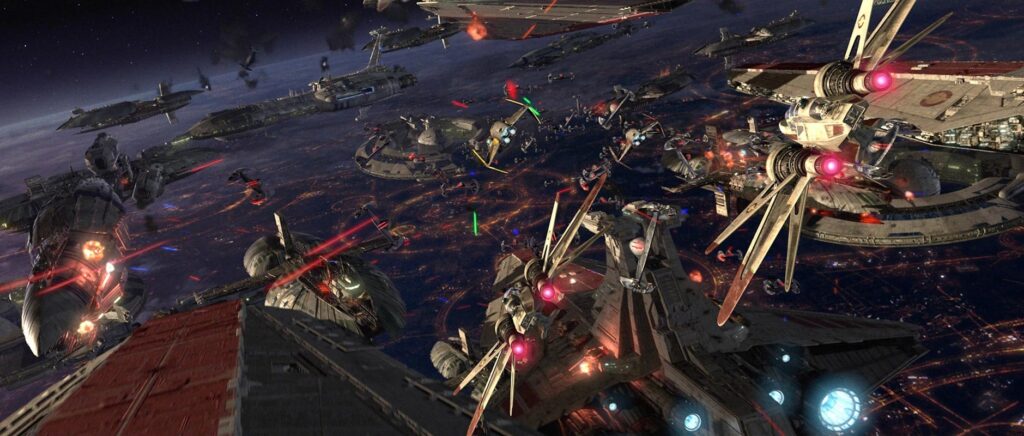
The Battle of Coruscant serves as the explosive opening to the final chapter of the prequel trilogy, and George Lucas clearly decided that if he was going to end this story, he was going to start with the biggest space battle in cinema history. The scale is staggering—thousands of capital ships from the Republic and Separatist fleets trading fire above the capital planet, with the fate of Chancellor Palpatine hanging in the balance. Anakin Skywalker and Obi-Wan Kenobi navigate their starfighters through this chaos, dodging missiles and enemy fighters as they attempt to board the Separatist flagship and rescue the kidnapped leader.
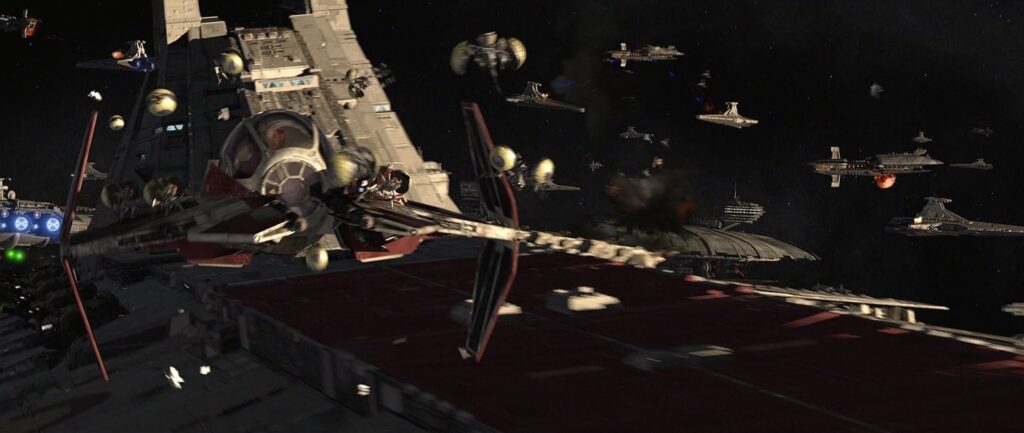
What separates this battle from lesser cinematic space combat is the clarity of the geography. Despite the chaos, you always know where the characters are in relation to the larger conflict. When Anakin and Obi-Wan fly into the hangar of the Invisible Hand, you understand the layout of the ship, the direction they’re moving, and the stakes of their mission. When the Star Destroyers trade broadsides, you can see the damage, the explosions, the debris fields that become obstacles for the fighters. It’s chaos with coherence, which is much harder to achieve than simply throwing pixels at the screen.
The technical achievement cannot be overstated. In 2005, CGI was still evolving, and the Battle of Coruscant pushed the technology to its absolute limit. The level of detail in the ship models, the complexity of the lighting, the sheer number of moving parts on screen at any given moment—it was unprecedented. Industrial Light & Magic outdid themselves, creating a sequence that still holds up today because the fundamentals are sound: good composition, clear action, and a sense of weight to the ships that makes them feel like actual vehicles rather than video game assets.
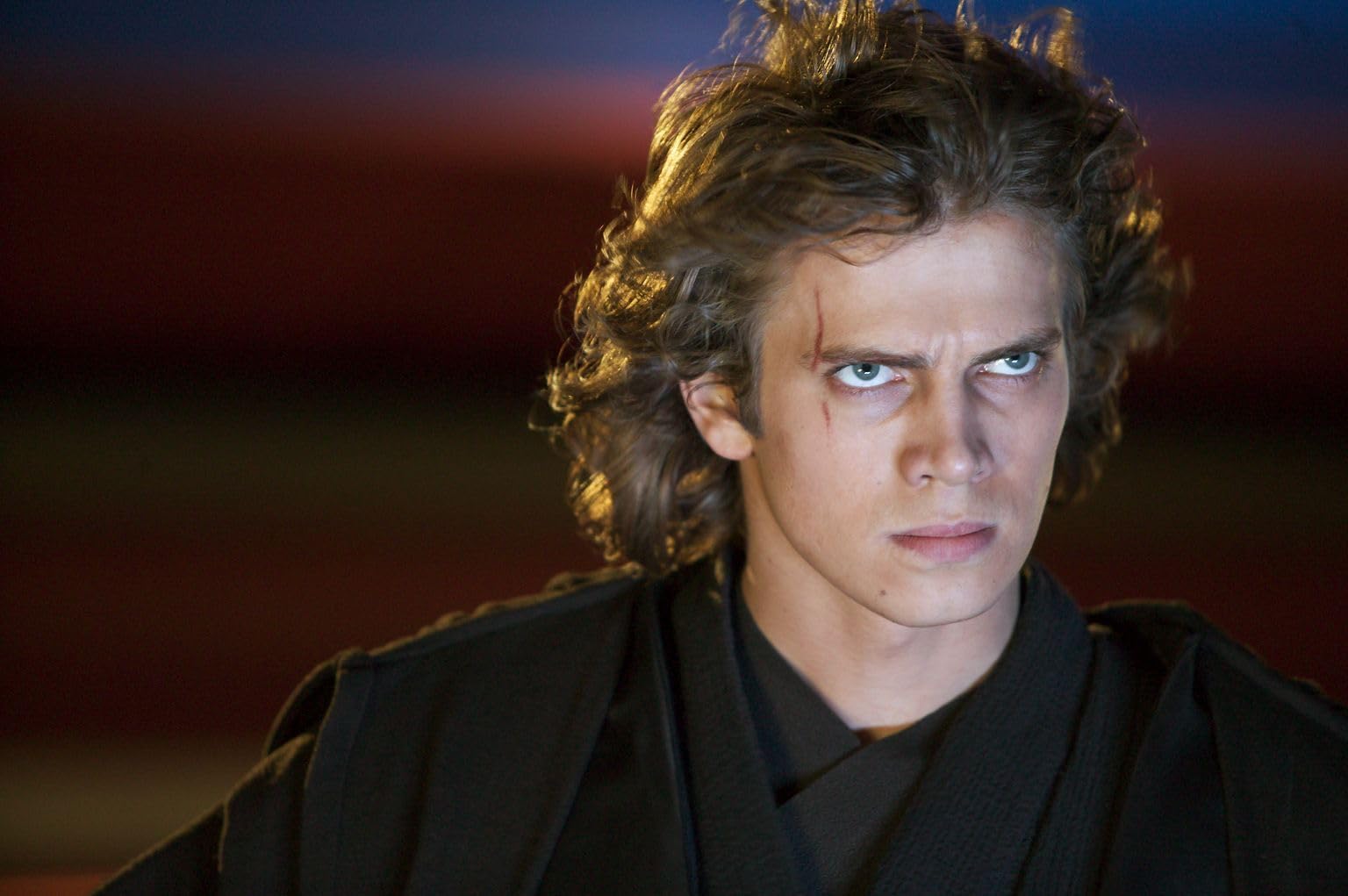
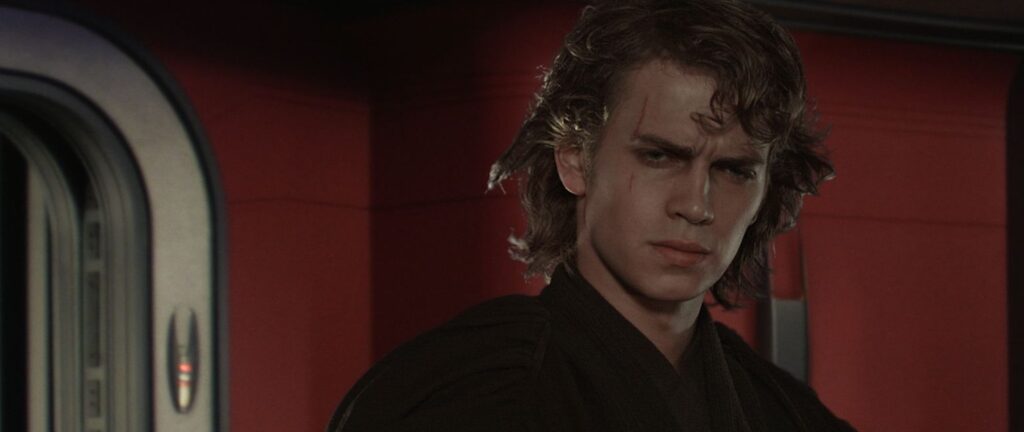
The battle also serves crucial narrative functions beyond spectacle. It establishes Anakin’s piloting skills and his recklessness, showing us a hero who is talented but impulsive, who takes risks that pay off but could just as easily kill him. It shows us the partnership between Anakin and Obi-Wan at its peak, the banter and the trust that makes their eventual confrontation on Mustafar so tragic. And it introduces us to the Clone Wars as a lived reality, not just a background detail mentioned in the original trilogy.
When compared to other space battles in the franchise, Coruscant stands apart. The Battle of Yavin in A New Hope is iconic but comparatively simple—X-wings versus the Death Star. The Battle of Endor in Return of the Jedi has emotional weight but visual clutter. The opening of Rogue One is stunning but brief. Coruscant sustains its chaos for nearly twenty minutes without losing momentum or coherence, a feat of editing and visual effects that has rarely been matched.
The sequence also benefits from the sound design. The roar of engines, the whine of lasers, the groaning metal of stressed hulls—it all combines to create an auditory assault that matches the visual one. When ships explode, they don’t just flash and disappear; they tear apart in stages, secondary explosions rippling through their structures, debris scattering with realistic physics that grounds the fantasy in reality.
Twenty years later, the Battle of Coruscant still sets the standard. Modern blockbusters have more advanced CGI, but they rarely have the ambition to stage something this massive and this coherent. It’s a reminder that technology is only a tool; the real magic comes from vision, planning, and the willingness to push the medium to its limits. George Lucas may have made questionable choices elsewhere in the prequels, but he gave us this sequence, and for that, we should be grateful.
Some battles define eras. This one defined what space combat could look like in the digital age.
Experience the chaos—rewatch Star Wars: Revenge of the Sith and marvel at the Battle of Coruscant, still the most impressive space battle in cinema history.
Also Read: Obi-Wan Kenobi Finally Explained Why Leia Cared So Much About a Man She’d Never Met